The Impact of Soil, Land Conditions, and Construction Environment on Mold Growth
2025/08/19

Thank you for visiting our blog again today.
In construction, mold problems are often attributed to poor workmanship or inadequate ventilation, but these are not the only contributing factors. One often overlooked cause lies in the “soil and land conditions” and the “construction environment” itself. Moisture-retaining ground, poorly ventilated locations with limited drying potential, and inadequate weather management or process control during construction—all of these elements significantly increase the risk of mold development. For construction companies building homes or commercial facilities, underestimating these natural conditions can lead to future structural deterioration, customer complaints, and even legal disputes.
In this article, we will focus on the role of soil conditions and the construction environment in mold-related issues on job sites and explain in detail the practical measures that should be taken to prevent such problems.
1. Risks and Countermeasures in Highly Humid Areas (Reclaimed Land, Marshland, etc.)
How Invisible "Subsurface Moisture" Can Severely Impact Buildings
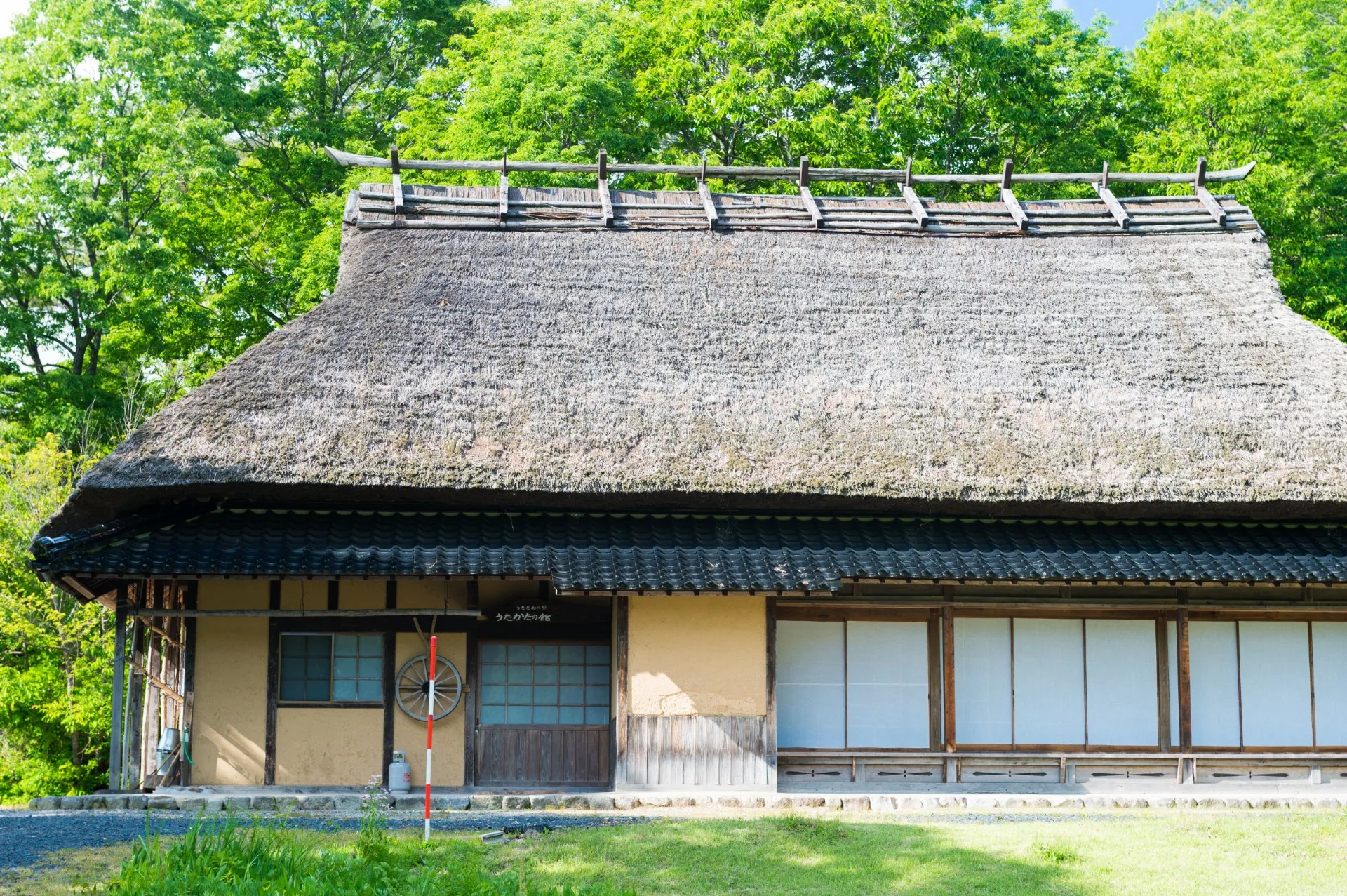
The characteristics of the land on which a building is constructed greatly influence the risk of mold growth. Particularly important to consider are so-called “humid zones,” such as areas that were formerly rice fields, marshlands, or reclaimed land, as well as locations with a high groundwater level. In these regions, the ground itself constantly retains moisture, which can transfer invisibly to the building's foundation and crawl space.
Even if the surface appears dry, the subsurface in humid zones is often saturated with moisture. As a result, water vapor can slowly rise from beneath the foundation concrete or the soil beneath the floor, eventually causing condensation on the back of wood structures, insulation, and flooring materials. This is especially problematic in homes built with sealed foundations, such as slab-on-grade or highly airtight crawlspaces, where insufficient ventilation allows moisture to accumulate, creating ideal conditions for mold growth.
Furthermore, the ground in such humid areas tends to be soft, increasing the risk of subsidence due to the building's weight. This can lead to cracks in the foundation, which in turn allow more moisture and rainwater to infiltrate, creating a vicious cycle. Without a deep understanding of how these ground conditions affect structures, mold damage or structural deterioration may occur just a few years after construction—even if building standards were initially met.
Therefore, when building in humid zones, it is essential to design with the assumption of battling unseen moisture. It's not enough to perform basic soil improvements; thorough moisture-proofing measures, enhanced ventilation strategies, and careful selection of materials are crucial. Superficial mold-prevention treatments are insufficient—the true characteristics of the land must be acknowledged and addressed head-on.
2. The Importance of Soil Improvement and Key Considerations During the Design Phase
In construction on humid or soft ground, it is common practice to perform soil improvement to ensure structural stability. There are several typical methods, including surface improvement, columnar improvement, and steel pipe piles. However, what's often overlooked is the need to plan soil improvement from the perspective of how to control moisture.
Surface improvement involves mixing cement-based solidifying agents into the topsoil to increase its strength. However, this method has limited effectiveness in sealing out soil moisture, and it cannot fully prevent vapor from rising from below. Columnar improvement and steel pipe piles are structural methods designed to transfer the building load to deeper supporting layers, but they do not directly address moisture issues.
What is needed here is a comprehensive approach that combines soil improvement with moisture-proofing, ventilation, and drainage design. For example, after soil improvement, placing a moisture barrier sheet (such as polyethylene film) between the ground and the foundation helps block water vapor from rising into the crawl space. On top of this, pouring an additional layer of concrete—commonly known as moisture-proof concrete—can further cut off the path for moisture migration.
Key considerations during the design phase should include the following:
Understand the groundwater level during soil investigation and evaluate the need for moisture control accordingly
Design building placement to secure airflow paths based on site conditions
Calculate ventilation volume in crawl spaces and decide between natural and mechanical ventilation
Consider installing humidity sensors or drainage pumps to monitor and manage moisture levels
In summary, soil improvement should not only support the structure, but also protect it from moisture. A simple cost-focused reinforcement is not sufficient; a multi-faceted approach that takes environmental factors into account is essential to achieve lasting durability and prevent mold problems.
3. Case Study: Mold Growth Inside the Foundation on Reclaimed Land and the Subsequent Remediation Work
How Inadequate Moisture-Proofing Design Led to Trouble and a Loss of Trust
In a newly developed residential area in an urban setting, a case was reported involving a two-story wooden house built on reclaimed land. Just one year after handover, the homeowner noticed a musty smell coming from the crawl space. Upon receiving the complaint, the construction company inspected the area and discovered widespread black mold growth on the foundation concrete walls and parts of the wooden structure.
An investigation revealed that the land had originally been marshland, resulting in a high groundwater level. The surface-level soil improvement was not sufficient to suppress the moisture effectively. Additionally, the vapor barrier installed during construction had poorly sealed seams, allowing moisture to rise from the ground into the foundation area. The closed-off crawl space then retained this moisture, creating a perfect breeding ground for mold.
The house had been built using a foundation insulation method that did not allow for external ventilation. As a result, once humidity levels rose, mold was able to spread rapidly. To address the issue, all underfloor materials were removed, and a professional mold removal and prevention contractor was brought in. Furthermore, a moisture-proof concrete layer was added beneath the floor, and both humidity sensors and a forced ventilation system were installed to prevent recurrence. This constituted a large-scale remediation effort.
As a construction company, it must be recognized that the quality of work in areas that are not visible to the client has a direct impact on overall customer satisfaction.
4. Discrepancies Between Design Plans and Actual Site Conditions
The Pitfall of Poor Ventilation Caused by the Gap Between Ideal Design and On-Site Reality
In architecture, design plans represent the finished form under ideal conditions. However, the land on which a building is actually constructed often presents “site-specific conditions” that are not easily reflected in the drawings, such as terrain, surrounding environment, and the influence of nearby buildings. These environmental factors can lead to poor ventilation or insufficient drying, which in turn become breeding grounds for mold.
For example, in narrow residential lots in urban areas, the distance to adjacent properties is often very small, and even if windows are placed on the south side, little sunlight may enter. Air circulation is also poor, and in many cases, airflow does not follow the ventilation plan. While natural ventilation may be assumed during the design phase through openings and vents, in reality, little outside air reaches the interior. As a result, high humidity conditions develop indoors, creating an environment where mold can thrive.
Additionally, the presence of large buildings or trees around the property can block airflow and significantly affect the ventilation performance of the building. In this way, “site-specific constraints” that do not appear on design plans can become hidden causes of mold problems.
To bridge this gap, it is crucial to conduct thorough site surveys before design, carefully assessing sunlight exposure and ventilation conditions. The use of CAD-based airflow simulations or shadow analysis can also be effective. Furthermore, close coordination between designers and site supervisors allows potential discrepancies between plans and actual site conditions to be addressed in advance, ensuring smoother handling during the construction phase.
5. The Impact of Construction Schedules and Climatic Conditions
Hidden Shortcuts in the Drying Process: A Trigger for Mold Growth
At construction sites, it is a fundamental principle to follow the schedule and proceed with each phase of the work. However, especially during the rainy season or in winter—when climate conditions such as humidity and temperature have a significant impact—it is not uncommon for the drying process to be insufficient before moving on to the next stage. This poses a major risk of mold growth on-site.
For instance, if structural wood such as columns and beams is installed during a period of heavy rainfall while the roof and exterior walls are still unfinished, the materials absorb moisture and retain a high moisture content, which then becomes sealed within the structure. Ideally, they should be thoroughly dried before moving forward, but due to tight deadlines and pressure to meet schedules, insulation or boards may be installed prematurely. This creates a high likelihood of mold developing inside the walls.
In addition, construction during winter slows down the drying process, and in airtight homes, indoor humidity cannot easily escape, dramatically increasing the risk of condensation and mold. Areas such as the gaps between insulation and structural components, around window frames, and in attic spaces—where air tends to stagnate—become prime spots for moisture buildup and mold growth.
To avoid such risks, a management system that can flexibly adjust workflows according to climate conditions is essential. The use of temporary dryers, dehumidifiers, or scheduling specific tasks on clear days can effectively prevent mold problems. Furthermore, adjusting the timing of material deliveries and carefully managing on-site storage conditions are also critical measures.
For construction companies, it is important to recognize that protecting quality is not simply about following the schedule, but about having the judgment to determine the appropriate timing for each phase of construction.
6. Case Study: Wall Cavity Mold Caused by Insufficient Drying in a High-Airtightness House
The Pitfall of Performance-Oriented Design — Invisible Mold Damage Caused by High Airtightness
In recent years, demand for high airtightness and high thermal insulation housing has been increasing in pursuit of better energy efficiency. While this improves heating and cooling performance and creates a comfortable living environment, it has also revealed a new risk—moisture tends to accumulate inside the structure.
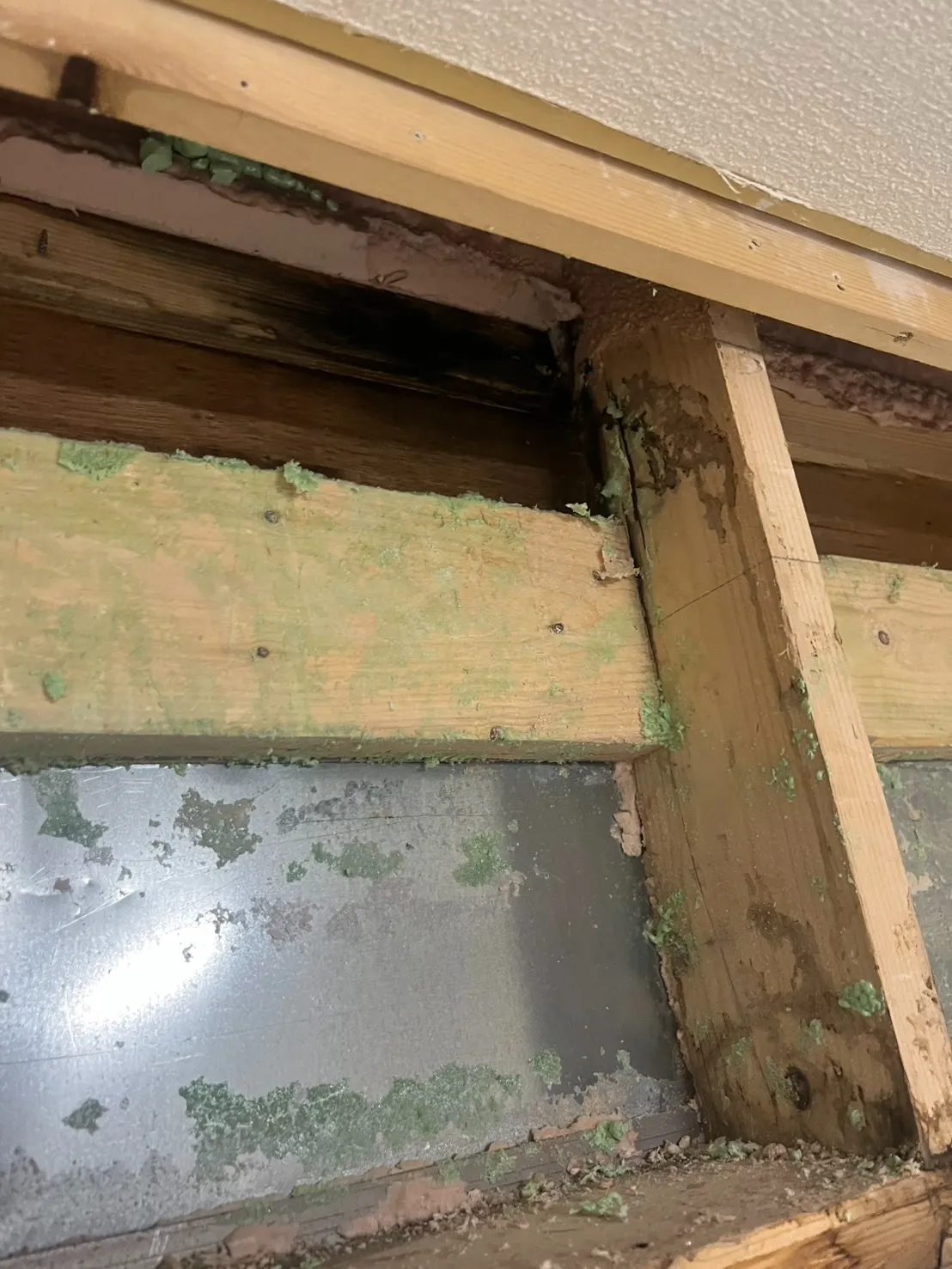
In one case, about two months after the handover of a newly built house, the homeowner reported that “the entire room smells moldy.” Although the interior appeared clean with no visible mold, when the wall coverings were removed, extensive mold growth was found on the surfaces of the insulation and structural members.
The cause was insufficient drying during construction. When it rained during the building process, waterproofing of the roof was not completed in time, leaving the interior wood temporarily wet. However, in order to keep to the construction schedule, sufficient drying time was not secured before the walls were closed. Due to the highly airtight structure, the trapped moisture remained inside, creating ideal conditions for mold to spread within the walls—this was a textbook example of how such problems occur.
In this case, a large-scale remediation was required, including the complete removal of wall coverings and insulation, mold treatment, and reinstallation. The construction company faced significant financial loss and a decline in trust. This case clearly illustrates the importance of the principle that “the parts unseen are precisely where the greatest care must be taken.”
7. Construction Planning Incorporating Site Surveys and Climatic Conditions
Incorporating the Perspective of the Natural Environment into Design: The First Step in Mold Prevention
To prevent mold, it is essential to first understand precisely what type of land a building will be constructed on. Soil surveys and land assessments conducted in the early stages of construction are not only vital for confirming structural stability but also serve as extremely important sources of information from the perspective of humidity and ventilation. In particular, reclaimed land, low-lying areas, and former marshlands pose direct mold risks due to high soil moisture content, groundwater levels, and poor airflow caused by surrounding conditions.
Based on the results of soil surveys, it is necessary not only to optimize the type and height of the foundation and the structure of the crawl space, but also to make thoughtful adjustments to the exterior design and building layout. For instance, positioning the building closer to the road and creating ventilation corridors within the site can effectively bring in outside air. In dense urban areas where houses are closely packed, incorporating courtyards or atrium-style designs to create airflow paths through the building is also highly effective.
Furthermore, performing sunlight simulations and wind direction analyses during the design phase helps visualize which areas of the site are most prone to moisture accumulation. For example, if a high-rise building stands to the south, a lack of sunlight can increase humidity levels along walls and under floors. In such cases, it is advisable to use exterior materials and insulation with high moisture-control properties, or to design thicker ventilation layers to mitigate the issue.
The impact of climatic conditions during the construction period must also not be underestimated. For instance, completing foundation work before the rainy season and scheduling roof and exterior wall installation to avoid prolonged exposure to rain are critical steps. Returning to the principle that “construction is a dialogue with nature”, it is vital to recognize that ignoring natural conditions in process management will ultimately compromise the quality of the building.
8. Mold Prevention Through Site Supervision and Construction Management
Visualizing Humidity During Construction: The Key to Preventing Problems Before They Occur
No matter how perfect the plans may be at the design stage, if on-site supervision and construction management are inadequate, mold can easily develop. During construction in particular, risks often lie in the finer details—such as material storage conditions, humidity management on-site, and the order of work. Proper supervision of these aspects is fundamental to preventing mold at its source.
The first step should be “visualizing humidity.” By installing humidity sensors in crawl spaces and indoors, real-time monitoring becomes possible, allowing immediate response when abnormalities are detected. Additionally, using devices to measure the moisture content of wood and boards, and ensuring that materials are sufficiently dried before installation, is an extremely effective rule to enforce.
In recent years, the use of infrared thermography to visualize insulation and moisture conditions has also attracted attention. By identifying areas at risk of condensation inside walls in advance, reinforcements or additional ventilation structures can be incorporated, eliminating potential mold breeding grounds before they form.
In construction workflows as well, procedures that emphasize “allowing moisture to escape” are critical. For example, before installing insulation, temporary blowers or dehumidifiers should be used to promote drying of the space. Moisture content should also be remeasured before applying finishing materials. Taking such extra steps prevents future problems and plays a key role in enhancing customer satisfaction.
Moreover, education is essential not only for site supervisors but also for all workers involved. Sharing the mindset of “paying the greatest attention to what cannot be seen” across the team, and deepening understanding of moisture control, leads to consistent construction quality and stronger trust with clients.
9. The Risk Management Perspective on “Land × Environment” That Construction Companies Should Adopt
Mold damage is often not immediately visible and in most cases becomes a problem only several months to years after people begin living in the building. This is why, for construction companies, it is crucial to adopt an attitude of not just “building and finishing,” but “building with potential future issues in mind.” In other words, the ability to implement risk management-oriented design and construction—taking into account environmental factors such as land conditions and climate even before construction begins—becomes a key point of differentiation from competitors.
To achieve this, it is essential to establish internal systems for risk management. Creating land condition checklists, weather risk maps, mold prevention manuals, and conducting regular study sessions and training programs all contribute to building a construction system resistant to mold, which in itself becomes a source of brand strength.
Furthermore, providing information to clients directly contributes to building trust. For example, during land selection, presenting proposals such as “This area tends to be humid, so we will incorporate these measures in advance” reassures clients that the company is truly reliable. Rather than concealing risks, openly disclosing them and demonstrating countermeasures strengthens the trust relationship with clients.
Additionally, offering periodic maintenance services after completion—such as crawl space inspections and humidity monitoring—enhances the appeal of after-sales service. This not only minimizes future complaints or repair risks, but also builds recognition as a company that approaches housing with a long-term perspective.
10. The Best Solution When Mold Occurs: The Effectiveness of the MIST Method®
On construction sites, no matter how carefully a building is designed or constructed, the reality is that it is difficult to completely eliminate the risk of mold due to natural conditions and external factors. In particular, in areas with high humidity or in highly airtight structures, problems may arise after handover, such as “a musty smell coming from the crawl space” or “black stains appearing behind the wallpaper.”
In such cases, what is demanded of a construction company is how quickly and accurately it can respond. This is where the MIST Method® comes in—a mold removal technique highly regarded for its ability to eliminate mold without damaging building materials, ensure safety for humans, and even reduce the risk of recurrence.
What Is the MIST Method®? The Fundamental Difference from Conventional Techniques
The MIST Method® is a technology that stands apart from conventional mold removal practices, as it eliminates mold completely without scraping the surface or damaging the material itself. Traditional approaches often involve sanding the surface of wood with sandpaper or applying chemicals with brushes to remove mold. However, these methods place stress on the materials and are unsuitable for delicate substrates or expensive finishes.
In contrast, the MIST Method® uses a unique “mist-spray system”, in which a specially developed mold-removal agent is atomized into a fine mist and applied. This allows the agent to penetrate deep into the material, breaking down and destroying mold at its roots. Moreover, the formula has been proven safe for humans, making it suitable even for homes where young children or elderly residents live.
Another significant feature is its ability to preserve materials by removing mold without the need for scrubbing. This is why it is even used in the restoration of historic buildings and cultural properties, where delicate materials such as wood, plaster, and paper must be treated without damage—an aspect that has earned the method high praise.
More Than Just Removal: A Comprehensive Approach That Prevents Recurrence
Most mold removal procedures end with simply cleaning away the mold, but this does not fully eliminate the risk of recurrence. In environments prone to humidity, even if surface mold is removed, spores remaining in the air or invisible hyphae can reproduce.
The MIST Method®’s strength lies in its thorough antimicrobial and anti-mold treatment after removal. The misted protective agent spreads across the treated surfaces, penetrating deep into the material. At the same time, it acts on airborne mold spores, destroying their cell membranes and inhibiting further growth.
This preventive treatment combines immediacy and long-term effectiveness, keeping mold from returning for extended periods after application. Additionally, because the concentration and application method of the agent can be flexibly adjusted depending on the purpose of the building and environmental conditions, the MIST Method® can be applied across a wide range of settings—from residential homes to commercial facilities, underground spaces, and warehouses.
Reported effects from sites treated with the MIST Method® include:
Complete elimination of mold odors before and after treatment
Zero recurrence of mold for several years
Testimonials from residents noting relief from allergy symptoms
Thus, the MIST Method® is not simply a “cleaning” technique, but a comprehensive solution for eradicating mold and preventing its recurrence.
Why Post-Mold Response Defines a Construction Company’s Reputation
When mold has already developed in a building, the most important factors are “swift, effective action” and “measures to ensure it never happens again.” The MIST Method® is unique in that it provides both in a single process.
For construction companies, being able to propose the MIST Method® in the event of unexpected mold growth is, in itself, a demonstration of sincerity toward clients and proof of technical competence. Rather than merely apologizing or offering patch repairs, presenting a forward-looking solution that prevents recurrence can transform a potential conflict into an opportunity to build even greater trust.
Introducing Trusted Expert Partners for Mold Prevention and Treatment
– Professional Mold Removal and Prevention Tailored to Regional Conditions –
Mold Removal Reform Tokyo & Nagoya: A Specialized Team Experienced in Urban Mold Issues
In the Tokyo and Nagoya areas, mold problems unique to densely populated residential zones and airtight condominiums are frequently reported. “Mold Removal Reform Tokyo & Nagoya” is a highly specialized team that excels in addressing these challenges. They focus on mold-prevention renovations that take into account building structures, land conditions, and residents’ living patterns, providing comprehensive services from mold removal and anti-mold treatment to long-term prevention. Their expertise is particularly notable in mold prevention integrated with renovations or repairs, where both precision and speed of construction are highly regarded. If you are struggling with “invisible mold” in Tokyo or Nagoya, this is the team to consult first.
Mold Busters Osaka: One of Western Japan’s Leading Experts in Mold Prevention and Disinfection
For those considering mold removal and anti-mold treatment in the Kansai region, “Mold Busters Osaka” is a reliable partner. Based in Osaka, they handle a wide range of projects, including homes, shops, hospitals, and childcare facilities. Their adaptability and the safety and effectiveness of the MIST Method® have earned them strong recognition. With extensive experience in treating mold in wooden crawl spaces, wall cavities, and moisture-prone commercial facilities, they are particularly known for their low recurrence risk. For safe and reliable mold prevention in the Kansai region, Mold Busters Osaka is a highly recommended choice.
Taiko Kensou: Professional Construction Expertise Delivering Mold Prevention That “Stops Recurrence”
“Mold prevention tailored to building structures—possible only because of true construction expertise.” This is what Taiko Kensou delivers. Based in Nagoya, this rare construction company specializes not only in residential remodeling and renovation but also in mold removal and prevention. Their philosophy is not merely to improve appearances but to identify root causes and implement long-term, recurrence-proof solutions. By adopting the MIST Method®, they provide high-quality responses that safeguard both buildings and residents. For homeowners considering a comprehensive review of their houses triggered by mold issues, Taiko Kensou is the ideal partner.
---------------------------------------------------------------------
カビ取リフォーム
東京営業所
〒141-0022
東京都品川区東五反田2-5-2 YHE CASK GOTANDA6階
電話番号:090-8321-4408
名古屋本社
〒465-0028
愛知県名古屋市名東区猪高台1-1301 タイコウビル1F
電話番号 : 0120-588-766
サイト:https://taikou-kensou.co.jp/
大阪営業所
〒532-0003
大阪府大阪市淀川区宮原1-19-23
電話番号:080-6978-3068
カビバスターズ大阪
https://kabibusters-osaka.com/
【検査機関】
一般社団法人微生物対策協会
https://kabikensa.com/
----------------------------------------------------------------------