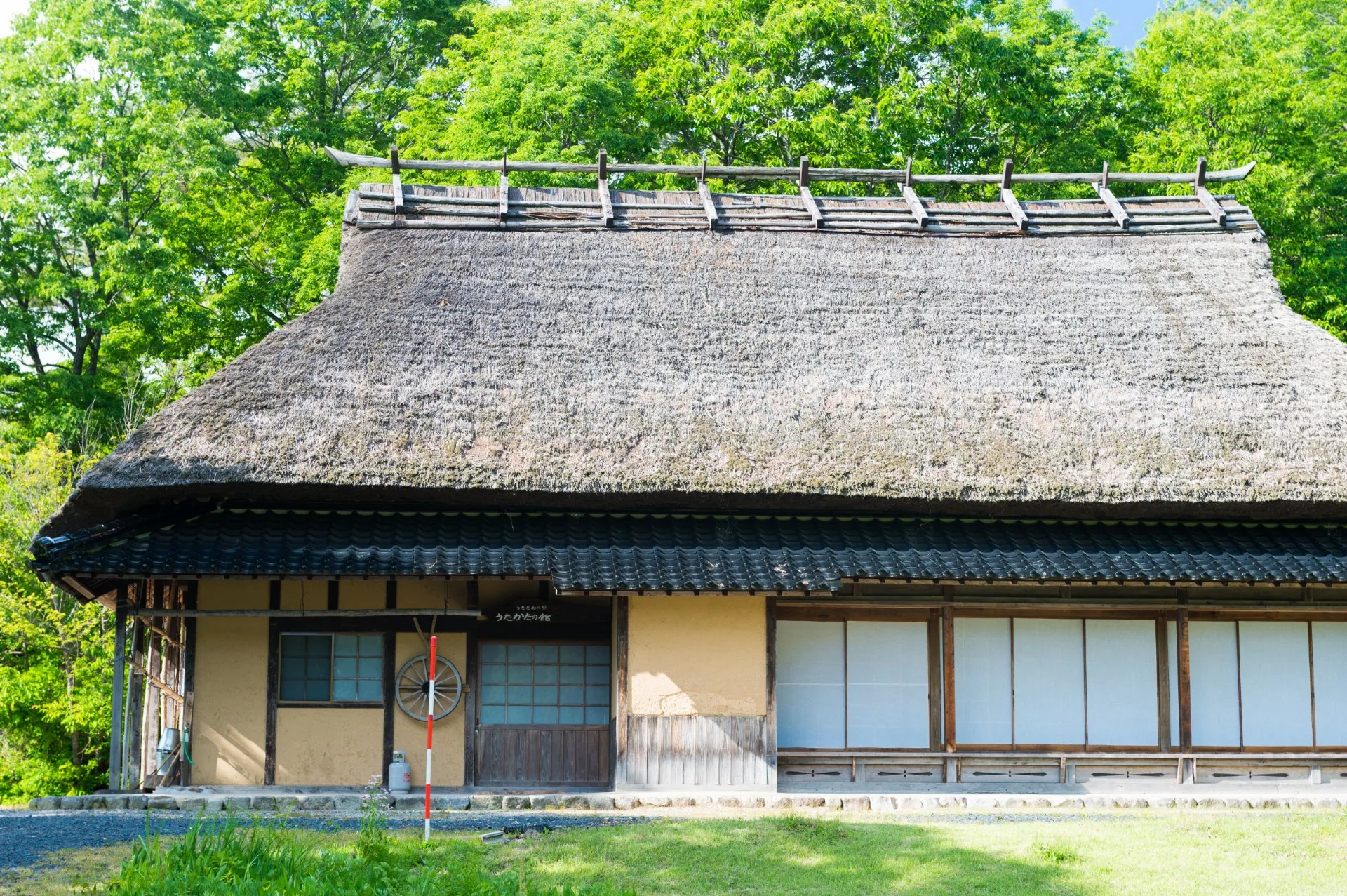
Mold Growth Mechanisms and Construction Precautions in Airtight, Highly Insulated Homes
2025/10/20
Thank you for visiting our blog today.
In recent years, the trend toward airtight and highly insulated housing has advanced rapidly within the construction industry. This design philosophy, aimed at improving energy efficiency and creating a comfortable indoor environment, has been widely embraced by homeowners. However, at the same time, cases of hidden mold contamination—inside walls and under floors—have been increasing dramatically.
Even homes that appear perfectly finished at completion can, after only a few months, develop dark stains on walls or unpleasant odors. Upon investigation, the causes often turn out to be interstitial condensation or moisture retained within structural materials. These issues are not merely the result of design flaws or construction errors but rather the breakdown of balance among structure, ventilation, and site moisture management.
In this article, we provide building professionals with a detailed explanation of the structural risks of mold inherent in high-performance homes and the scientific approaches required during the construction phase to prevent them.
1. The Relationship Between Airtight, Highly Insulated Homes and Mold Risks
The Hidden Trap of Moisture in High-Performance Homes — How Imbalances in Airtightness, Insulation, and Ventilation Lead to Interstitial Condensation and Microbial Contamination
1-1. What Happens When the Balance Between Airtightness and Ventilation Is Lost
Airtight and highly insulated homes are designed to keep outside air from entering and to prevent indoor heat from escaping.
This concept is excellent for both energy efficiency and comfort.
However, when airtightness is increased too much, a serious problem can arise — air no longer circulates properly.
Moisture generated inside the home — from cooking, bathing, laundry, and even breathing — will remain trapped indoors if ventilation is insufficient.
In a highly airtight home, because outside air cannot easily enter, the inside air also cannot easily escape.
This means that moisture has nowhere to go and tends to accumulate inside wall cavities and under the floor.
If this continues for a long time, condensation occurs inside the walls, creating ideal conditions for mold and wood-decay fungi to grow.
In other words, simply improving airtightness does not make a house comfortable; an appropriate ventilation plan must accompany it.
Particular caution is needed when the home’s airtightness is excellent but the ventilation system’s airflow volume or duct layout does not match that performance level.
If moist air is not exhausted properly, areas where the temperature difference between indoor and outdoor air is large can become “moisture pockets,” where condensation easily forms.
For example, even if the living room is well-ventilated, air may not circulate in the back of closets or in attic spaces, allowing humidity to build up unnoticed.
These hidden areas often become danger zones where mold develops without being seen.
When building a home, airtightness and ventilation must be planned together.
If one is emphasized without the other, even with high-performance insulation materials, condensation and mold can still form inside the structure.
1-2. Subtle Signs of Mold Often Overlooked on Construction Sites
Mold does not appear suddenly.
In fact, small signs often emerge gradually during the construction process.
For instance:
A section of wallpaper appears to be lifting slightly.
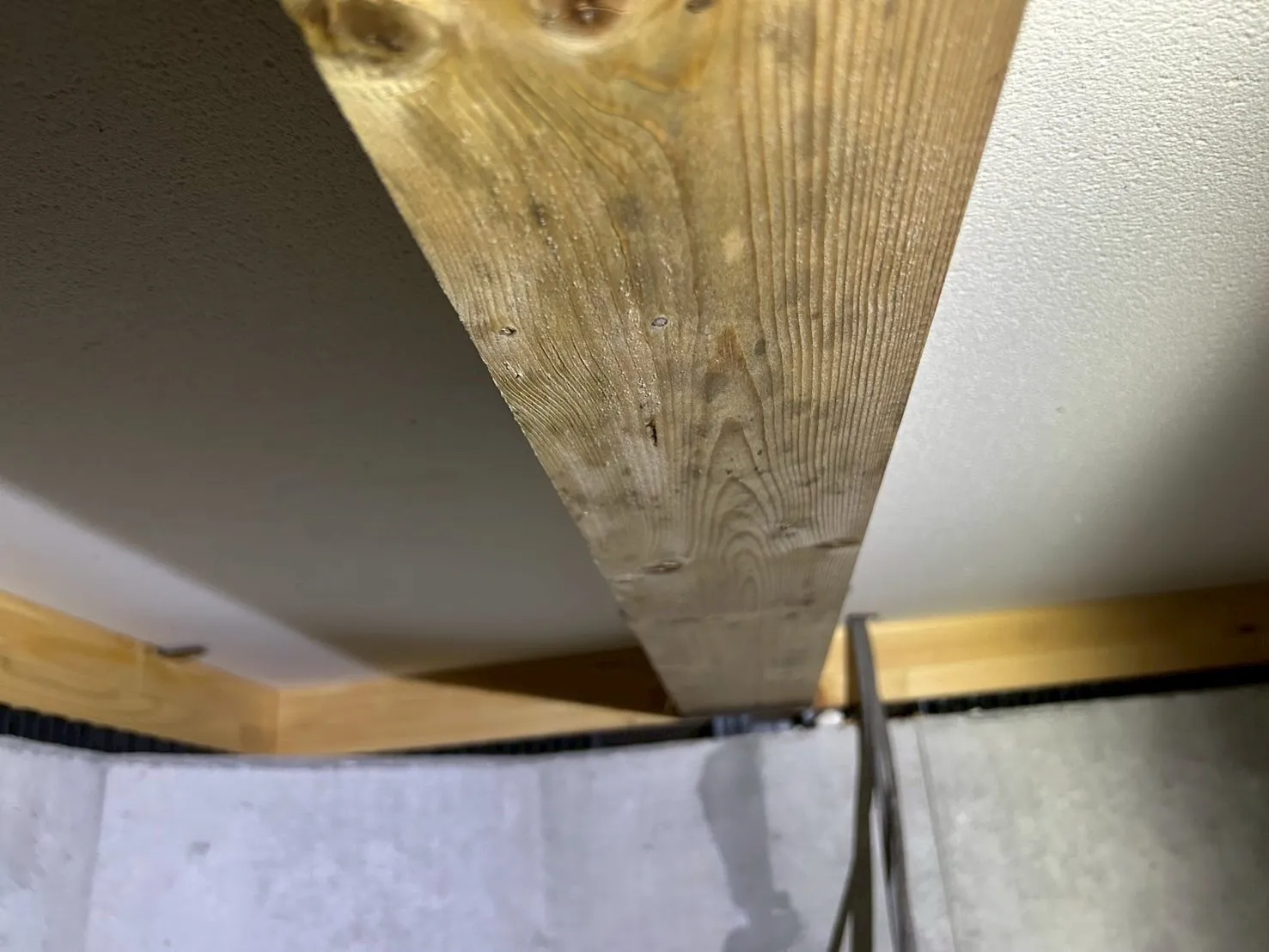
A faint musty odor is noticeable when the floor-access panel is opened.
The back of a closet or storage space feels damp.
A white, powdery substance is visible on the back of ceiling boards.
All of these are warning signs that moisture is stagnating or air is not circulating properly.
Yet, on many job sites, such subtle indications are often dismissed as “not a problem” simply because everything looks clean and new.
As homes become increasingly airtight and highly insulated, outside air enters less — and moisture escapes less.
This means that even small amounts of trapped moisture dry very slowly, and mold can spread unnoticed inside walls or beneath floors.
This is particularly troublesome in new constructions or immediately after renovations: the materials look pristine, so humidity problems are easy to overlook.
However, if materials are not fully dried before installation, the internal humidity can rise, and mold may appear within just a few weeks.
Therefore, it is crucial to approach every site with the mindset that “mold starts in places you cannot see.”
Before installing wallpaper, flooring, or insulation, verifying the moisture content and humidity levels can prevent major problems later.
If craftsmen and site supervisors adopt this mindset, they can significantly reduce the risk of mold growth.
As housing performance continues to improve, ensuring adequate drying time and creating systems that allow humidity to escape are becoming the key factors that determine overall construction quality.
2. The Four Conditions for Mold Growth and Structural Risk Areas in Buildings
No matter how high a home’s performance is, mold will inevitably grow if certain conditions are met.
Those conditions are: (1) oxygen, (2) moisture (humidity), (3) temperature, and (4) nutrients such as dust or wood.
When all four factors are present at the same time, mold can begin to grow within just a few days.
2-1. Oxygen and Moisture: The Basic Conditions for Mold Survival
Mold is a living organism. Like all living things, it needs oxygen to breathe and moisture to remain active.
Areas in the home where air circulation is poor—such as the backs of closets, inside storage spaces, or behind furniture—tend to trap humidity and provide ideal breeding environments for mold.
During Japan’s rainy season or in winter, when condensation often occurs, the moisture content in the air increases.
As a result, wallpaper and wooden materials absorb water and remain damp for long periods.
Under such conditions, mold spores can land and grow visibly within just a few days.
2-2. Temperature: 20°C–30°C Is the Ideal Range for Mold Growth
The temperatures most comfortable for people are also the ones most favorable for mold activity.
In particular, when the temperature ranges between 24°C and 28°C with high humidity, mold growth accelerates dramatically.
In summer, a closed-up room or, in winter, a wall cavity warmed by indoor heating but cooled by outside air can both create the same problem:
“warm, moist air that doesn’t move.”
This condition leads to condensation inside the walls.
When this condensation repeats over time, hidden materials such as wood and insulation become contaminated with mold that spreads invisibly within the structure.
2-3. Nutrient Sources: Building Materials and Dust as Mold’s Food
What does mold feed on?
Surprisingly, almost everything inside a building can serve as a nutrient source for mold.
Wood, wallpaper, adhesives, dust, skin oils, and even dead dust mites all become “a feast” for mold.
Especially after new construction or renovation, surfaces of wood and base materials may still retain moisture and dust.
When combined with humidity, mold can multiply rapidly.
If insulation or finishing materials are installed under these conditions, the mold becomes trapped inside the structure, continuing to grow unseen.
2-4. Building Areas Most Prone to Mold Growth
Places where the four conditions for mold growth—oxygen, moisture, warmth, and nutrients—come together are typically found in the following areas:
Inside walls: Large temperature differences between interior and exterior promote condensation.
Under floors / insulated foundations: Trapped humidity dries very slowly.
Ceiling or attic spaces: Poor ventilation and rising heat from HVAC systems create warm, stagnant air.
Wet areas (bathrooms, kitchens, laundry rooms): High humidity and condensation around piping.
North-facing rooms or storage closets: Limited sunlight and low airflow prevent moisture from escaping.
Because these areas are hidden from view, it is difficult to detect mold visually.
Regular inspections using thermographic imaging or hygrometers are effective for identifying risk areas early.
2-5. How to Prevent Invisible Mold
The most fundamental principle for preventing mold can be summed up in three key actions:
“Do not trap moisture, do not seal it in, and allow time for drying.”
Even with excellent airtightness, a structure that cannot release moisture is at risk.
Before installing insulation or finishing materials, it is essential to allow adequate drying time and measure internal humidity levels before moving to the next phase of construction.
By thoroughly managing moisture in these unseen areas, builders can not only prevent mold but also earn greater trust from clients and protect the overall quality and durability of the building.
3. The Importance of Moisture Content Control During the Construction Phase
In preventing mold growth, managing moisture within the building structure is critically important.
In particular, the amount of water contained in materials such as wood and base substrates—known as moisture content—is the most decisive factor in whether mold will appear.
No matter how advanced the insulation materials are, if the wood remains damp, mold will inevitably begin to grow inside it.
3-1. What Is “Moisture Content” in Wood?
Even when wood appears dry, it always contains a certain amount of internal moisture.
The percentage of water contained within the material is known as its moisture content.
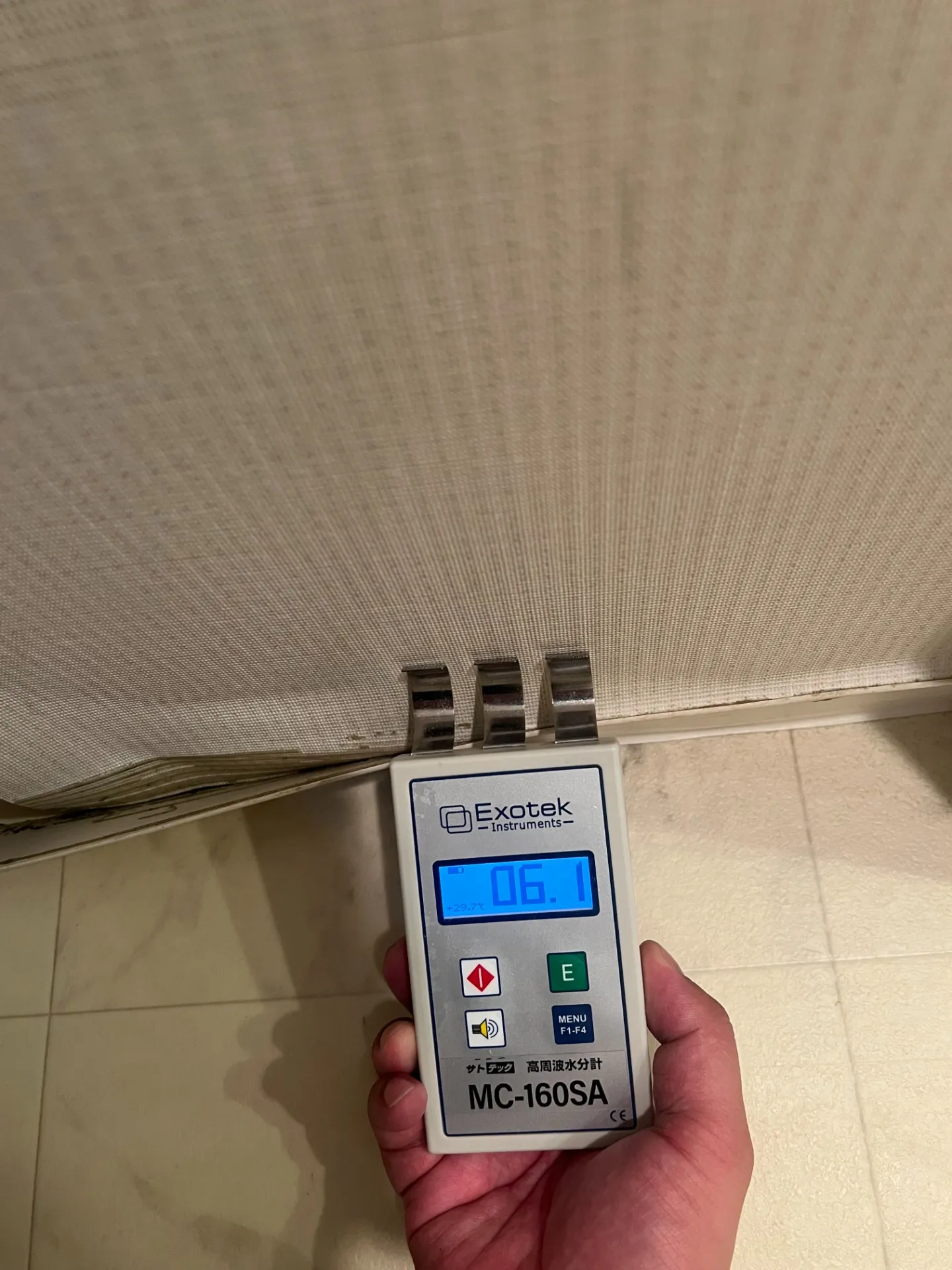
Ideally, well-dried wood should have a moisture content of around 15%.
Once it exceeds 20%, mold and decay fungi can begin to grow easily, and above 25%, mold may penetrate deep inside the material itself.
Therefore, measuring how dry the wood is before construction begins is the first crucial step in preventing mold.
Since this cannot be judged by sight alone, a moisture meter is used to verify the exact level.
3-2. Mold Damage Caused by Rain-Soaked Lumber
When rain falls after framing or before exterior walls are completed, wood absorbs water and its moisture content rises temporarily.
If insulation or drywall is installed without allowing the wood to dry thoroughly, the moisture becomes trapped inside the walls with no way to escape.
This is particularly risky during Japan’s rainy or autumn seasons.
If construction continues before adequate drying, mold can spread behind wallpaper, and unpleasant odors may appear soon after the homeowners move in.
Such incidents are increasing nationwide every year.
The correct response on site is to have the “courage to wait for drying.”
Even when the schedule is tight, do not move on to the next stage if internal moisture remains.
That single decision can prevent major problems later.
3-3. The Importance of Drying Concrete and Base Materials
Moisture management is not only about wood.
Foundation concrete and mortar base materials also contain a large amount of water.
In homes using foundation insulation systems, the moisture released from concrete can accumulate as humidity under the floor, collecting behind insulation or on the underside of flooring.
If this situation continues, temperature differences in the crawl space can lead to condensation and, eventually, hidden mold growth.
In fact, inspections sometimes reveal cases where black mold developed on insulation in homes less than a year old.
It is essential to confirm that the foundation and base materials are completely dry before they are concealed.
Using hygrometers and air blowers to ensure dryness before proceeding to the next stage is ideal.
3-4. The Importance of Keeping Moisture Records
In recent years, builders have been encouraged to document humidity and moisture content levels as part of quality assurance.
This record serves as valuable evidence in case of future disputes, proving that proper drying checks were conducted.
For homeowners as well, a builder who carefully manages moisture earns trust and confidence.
In today’s market, making invisible quality visible has become a key factor in how construction companies are evaluated.
3-5. Technologies and Partnerships That Support Moisture Control
At Taikou Kensou Co., Ltd., we place great emphasis on on-site measurement of humidity and moisture content.
Our teams provide integrated services, including mold removal using the MIST Method® and re-drying treatments during renovation.
Through our specialized brands — Kabibusters Osaka and Kabitore Reform Nagoya/Tokyo —
we offer one-stop solutions combining mold inspection, removal, and interior renovation, helping to restore and enhance construction quality.
By working closely with builders and architects, we promote a new standard of “quality assurance that begins with moisture management.”
4. What Is the MIST Method® — A Next-Generation Mold Remediation Technology That Eliminates Mold Deep Within Building Materials
Integrating Mold Removal and Renovation — Why the MIST Method® Provides a Complete Solution for Removal, Restoration, and Recurrence Prevention
4-1. The Limitations of Conventional Mold Removal
Most conventional mold-removal methods rely on chlorine-based or alcohol-based chemicals to wipe away the mold only from the surface.
While the surface may appear clean, the roots of the mold (hyphae) penetrate deep into the wood or gypsum board, and surface treatment alone cannot prevent regrowth.
In addition, chlorine-based products are highly volatile, produce strong odors, and may damage materials, making them unsuitable for maintaining a healthy indoor environment.
4-2. How the MIST Method® Works
The MIST Method®, adopted by Taikou Kensou Co., Ltd., is a micro-particle removal technology that penetrates deep into building materials.
Using specialized equipment, an ultra-fine mist of a proprietary solution (called MIST-1) is sprayed evenly throughout the air and into the interior of the materials.
This solution chemically breaks down the cell structure of mold, eliminating it completely down to its root hyphae.
Because the mist’s particles are even finer than those of water, it can penetrate the capillaries of building materials, reaching not only surface-level mold but also microorganisms hidden deep inside.
This three-stage process of penetration, decomposition, and sterilization is what defines the MIST Method® and makes it uniquely effective.
4-3. Safety and Environmental Performance of the MIST Solution
The specialized solution used in the MIST Method® contains no chlorine, alcohol, strong acids, or strong alkalis.
It does not damage building materials and produces no irritating odor or residue after treatment, making it safe to use even in occupied homes, medical facilities, daycare centers, and senior care facilities.
The main active ingredients selectively break down the cell membranes of mold and bacteria while maintaining near-neutral chemical properties.
This makes the solution safe and effective for a wide variety of materials — wood, gypsum board, wallpaper, and concrete — without causing discoloration or corrosion.
4-4. Application Procedure
The MIST Method® follows the steps below:
1. On-Site Inspection and Mold Contamination Assessment
Using moisture meters and diagnostic tools, the extent of contamination and sources of humidity are identified.
2. Preparation and Surface Cleaning
Areas not being treated are carefully protected, and dust or surface debris is removed to prepare the substrate.
3. Micro-Mist Application of MIST-1 Solution
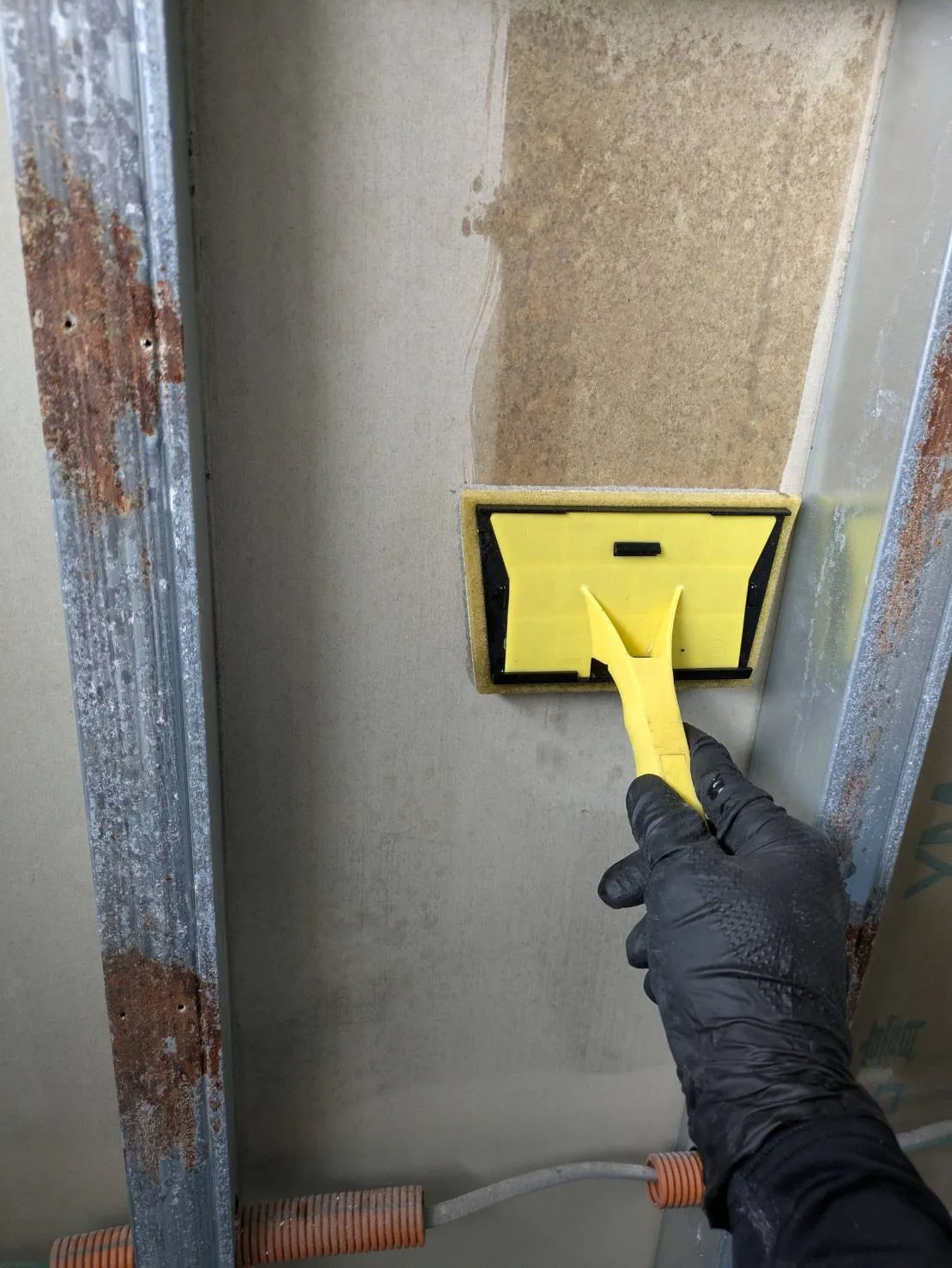
A specialized device sprays ultra-fine particles of the cleaning solution, which penetrate deep into the materials and chemically decompose mold at its roots.
4. Neutralization and Dehumidification
After the chemical reaction, the treated area is dried to remove any residual moisture.
5. Antibacterial / Anti-Mold Coating (Optional)
A protective finishing treatment is applied to help prevent future mold growth.
Unlike surface cleaning, the goal of the MIST Method® is to eradicate the living roots of mold hidden within the material itself.
For Mold Problems, Contact Kabitore Reform Tokyo/Nagoya or Kabibusters Osaka.
Without chlorine and without damaging materials — a next-generation mold prevention technology that decomposes and removes mold roots deep within building materials using ultra-fine mist, preventing regrowth while restoring the “health” of the building through integrated renovation.
In the past, homebuilding placed the greatest emphasis on design and thermal insulation performance.
Today, however, the era has shifted — now it is the “invisible qualities” of a house, such as the purity of its air and the soundness of its internal materials, that determine its true value.
Mold quietly damages buildings from within and can also affect human health.
No matter how well a home is insulated or airtight, it cannot be called truly comfortable if mold is growing behind its walls.
To prevent this, it is essential at every stage — from design and construction to site management — to understand humidity and airflow scientifically and control them through measurable data.
When the Worksite Improves, Buildings Improve
Every single decision made on-site influences the lifespan of a building.
Drying rain-soaked lumber thoroughly, measuring foundation humidity, adjusting ventilation balance —
these small acts of care collectively prevent mold formation and earn lasting trust from homeowners.
“Handle the invisible parts with care.”
This mindset will define the new standard of quality in the construction industry.
“Restoration Without Destruction” — The MIST Method®
At Taikou Kensou Co., Ltd., we have developed a unique technology that removes mold inside buildings without dismantling or damaging them — the MIST Method®.
This groundbreaking system penetrates deep into building materials, decomposing and removing mold roots at their source.
It uses no chlorine, causes no damage to surfaces, and prevents recurrence — truly a medical-grade technology for protecting buildings.
Furthermore, through our regional brands — Kabitore Reform Tokyo/Nagoya and Kabibusters Osaka —
we provide integrated services that combine mold removal and renovation, restoring homes and improving indoor environments across the Tokai, Kansai, and Kanto regions.
If you are struggling with mold problems, please don’t hesitate to contact us.
We are here to help you restore your building’s health and comfort.
---------------------------------------------------------------------
カビ取リフォーム
東京営業所
〒141-0022
東京都品川区東五反田2-5-2 YHE CASK GOTANDA6階
電話番号:090-8321-4408
名古屋本社
〒465-0028
愛知県名古屋市名東区猪高台1-1301 タイコウビル1F
電話番号 : 0120-588-766
サイト:https://taikou-kensou.co.jp/
大阪営業所
〒532-0003
大阪府大阪市淀川区宮原1-19-23
電話番号:080-6978-3068
カビバスターズ大阪
https://kabibusters-osaka.com/
【検査機関】
一般社団法人微生物対策協会
https://kabikensa.com/
----------------------------------------------------------------------