The Deep Connection Between Building Materials and Mold: How Moisture Content Testing Reveals Hidden Risks and Solutions
2025/10/14
Thank you for visiting our blog today.
Mold on building materials? Moisture content might be the hidden culprit.
“Is that a faint black stain on the wall or ceiling?” “It kind of smells musty in here…” — Have you ever had these experiences?
In many cases, mold on building materials is caused by poor moisture and moisture content management. Mold isn’t just an unsightly stain — it’s an invisible threat that can lead to material deterioration and health issues.
In this article, we’ll clearly explain how mold forms on building materials, the important concept of moisture content, and effective strategies to prevent recurrence. Whether you’re building new or renovating, this is essential moisture knowledge to help you maintain a safe and healthy home.
1. How Mold Develops on Building Materials
What Are the Basic Conditions for Mold Growth on Construction Materials?
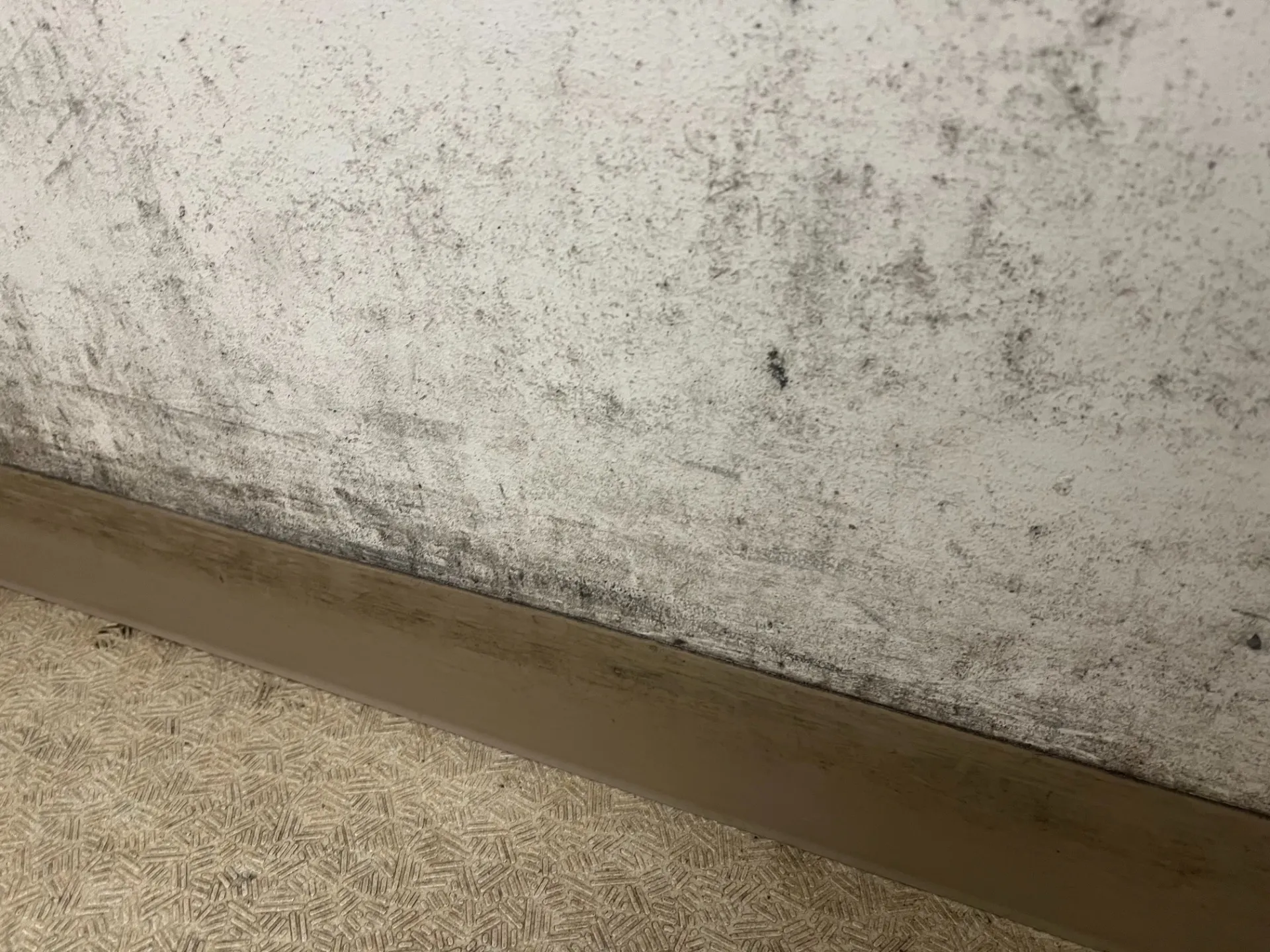
Mold tends to develop on building materials when certain conditions necessary for its growth are present. These conditions are known as the "three pillars" of mold proliferation: temperature, moisture (or humidity), and organic nutrients. Building materials themselves, as well as paint, adhesives, and accumulated dust, often contain organic substances that can serve as food sources for mold. Materials such as wood, gypsum board, wallpaper, and insulation are particularly prone to absorbing moisture. When they remain damp and fail to dry completely, the risk of mold growth increases significantly.
Mold is also more likely to appear in areas where building materials are repeatedly exposed to humid conditions. These include inside walls, ceiling cavities, crawl spaces, behind bathrooms, and joints with exterior walls—all places with poor ventilation where moisture tends to accumulate. Improper construction, water leaks, and ongoing condensation can allow moisture to infiltrate and remain trapped inside the materials, creating ideal conditions for mold to thrive.
2. What Is Moisture Content? The Relationship Between Building Materials and Water
Moisture Content: An Indicator of How Much Water Is Contained in Building Materials
2-1. Definition and Meaning of Moisture Content
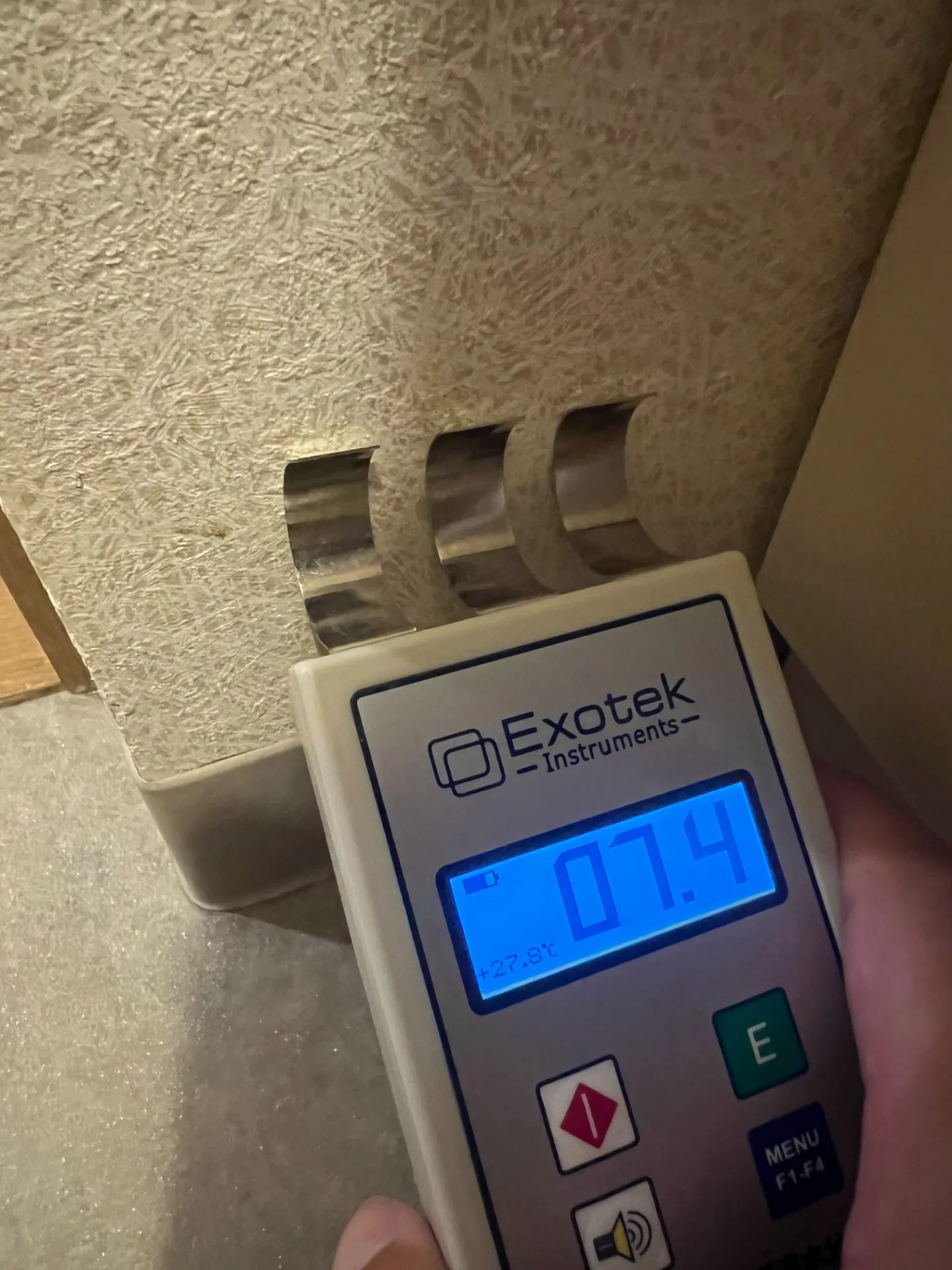
Moisture content refers to the percentage of water contained within a material, such as a building component. It is typically expressed as a percentage based on the material’s dry weight. For example, if a material has a dry weight of 100 grams and weighs 110 grams at a given moment, its moisture content is 10%.
Building materials naturally absorb or release moisture depending on surrounding humidity, temperature, and environmental conditions. This constant balancing act leads to a state known as the Equilibrium Moisture Content (EMC) — a point at which the moisture in the material is in balance with the surrounding air.
When the moisture content becomes too high, the material remains in a persistently damp state, significantly increasing the likelihood of mold growth or decay fungi infestation.
2-2. Acceptable Moisture Content Levels by Material
Each building material has a recommended moisture content range to maintain durability and avoid mold risk. For instance, wood used as structural material in homes is generally considered safe at a moisture content below 20%. When this threshold is exceeded, the risk of mold and wood-decay fungi increases.
In practical applications, it's often recommended to dry wood to 19% or lower to effectively reduce the potential for mold development. Furthermore, for homes using solid wood (e.g., custom timber houses), maintaining moisture content below 15% is considered ideal. This lower threshold helps manage moisture fluctuations, prevent condensation, and improve long-term mold resistance.
However, these values should only be taken as general guidelines. The optimal moisture level varies depending on the type of material—whether wood, plywood, insulation, or gypsum board—as well as surrounding humidity, ventilation, and installation conditions.
2-3. How Dangerous Is High Moisture Content?
A high moisture content in building materials isn’t just about dampness — it often means mold growth, material deterioration, and accelerated structural decay. Especially in wood, once the moisture content exceeds 20%, the risk of mold increases dramatically, and at 25% or higher, wood-decay fungi may begin to thrive.
For example, if a material becomes wet due to a roof leak or plumbing issue and is not properly dried, its moisture content may exceed 30%. In such cases, visible mold can begin to grow within just a few days to a week. There have been real-world cases where black or blue mold appeared inside ceilings and wall cavities at moisture levels above 30%.
Moreover, as mold and decay progress, the structural strength of the material can drop significantly. When wood used in framing or support structures begins to rot, it may compromise the earthquake resistance and longevity of the building. High moisture content can also lead to adhesive failure, peeling paint, bubbling finishes, and staining or discoloration of wallpaper—affecting not only the strength but also the appearance of interiors.
In short, even if materials feel “just a little damp,” a moisture content above 20% should be considered a serious warning sign. Early inspection and proactive action are critical to prevent costly damage.
3. The Importance and Methods of Moisture Content Testing
Turning Invisible Moisture into Measurable Data for Better Decision-Making
3-1. Why Moisture Content Testing Is Necessary
The main purpose of moisture content testing is to visualize how much moisture is present in building materials. By converting invisible moisture into measurable data, it becomes possible to make informed decisions such as:
Determining whether mold risk is present and identifying affected areas
Pinpointing sections that require dehumidification or drying
Verifying if drying has been completed after construction or renovation
Predicting deterioration or decay risks in the materials
In many professional settings, moisture content measurement is part of the on-site inspection process. The collected data is used to create detailed estimates and tailor appropriate remediation strategies.
3-2. Common Measurement Methods and Practical Applications
Several types of moisture measurement methods are used in actual fieldwork:
Electrode (Conductive) Method: This method involves touching electrodes to the surface to measure electrical resistance, which correlates with moisture levels. It's easy to use and provides instant readings. However, it only measures the surface or near-surface moisture and may be influenced by salts or conductive materials.
Drying (Gravimetric) Method: A sample is extracted and dried, and the moisture content is calculated based on the difference between the wet and dry weight. While highly accurate, it is a destructive method that requires cutting into materials.
Infrared Absorption / Dielectric / Microwave Methods: These non-destructive techniques rely on how water interacts with electromagnetic waves or affects dielectric properties. They can sometimes measure deeper layers but often require careful calibration and interpretation.
Deep-Penetrating Devices: Some tools can measure moisture several centimeters inside walls or structural elements. These are useful for identifying moisture buildup beneath the surface.
In practice, professionals often use a combination of electrode and drying methods, choosing the appropriate tool based on the material and situation.
3-3. Important Considerations and Common Misunderstandings in Moisture Testing
Moisture testing is a powerful tool to visualize dampness in materials, but it must be done correctly to avoid misjudgments. Here are several key considerations and common misconceptions:
The first issue is measuring only the surface and overlooking internal conditions. Most electrode-type meters only measure a few millimeters deep, so they may miss moisture trapped inside walls, ceilings, or under floors. Even if the surface appears dry, internal moisture may still be present.
The second issue is measurement variability depending on material and conditions. For example, different wood species, density levels, or the presence of salts and ions can affect the readings. Temperature and ambient humidity can also impact results, even for the same material.
A common misconception is that “low moisture content means it’s safe.” Mold can still develop due to temporary condensation or fluctuating humidity. Conversely, even high moisture levels may not pose a major threat if drying occurs quickly in a well-ventilated environment.
Therefore, moisture content test results should be considered just one of many factors. The surrounding environment, material characteristics, and construction conditions must also be taken into account. It's essential to work with a trustworthy contractor who can explain measurement points, methods, and results clearly and professionally.
4. What Moisture Content Levels Can Tell You
The Higher the Moisture Content, the Greater the Risk of Mold Growth
4-1. Predicting the Risk of Mold
When moisture content exceeds a certain level, mold is much more likely to germinate and spread. For wood materials in particular, it is generally accepted that mold and decay fungi risks increase significantly once moisture content surpasses around 20%.
For example, when moisture content exceeds 20%, it becomes more difficult to remove the moisture, allowing it to linger within the material. This often results in deep-rooted mold growth, as reported in various real-world cases.
However, even materials with low moisture content can develop mold under poor humidity conditions. Therefore, moisture content alone cannot be the sole factor in determining mold risk—ambient humidity and airflow conditions must also be considered.
4-2. Deterioration, Decay Risk, and Material Durability
If high moisture levels persist over a long period, it creates favorable conditions not only for mold but also for decay fungi, which break down wooden materials. This can lead to a serious decline in structural integrity, including loss of strength, warping, cracking, and surface peeling.
Additionally, residual moisture in building materials can compromise thermal insulation and heat conductivity, making condensation more likely and further impacting the indoor living environment.
In this sense, managing moisture content is directly linked to the longevity and structural stability of buildings.
4-3. How to Use Moisture Content Data Effectively
Measuring moisture content is only the beginning. What truly matters is how that data is used to inform mold prevention and long-term building maintenance. Simply noting a percentage value like “22%” is not enough—you must assess whether that value poses an immediate threat or if it requires continued monitoring.
One key point is tracking moisture content over time. Avoid making decisions based on a single reading. Instead, conduct multiple measurements at different intervals, especially after construction or water damage. For example, a follow-up measurement 1–2 weeks later can reveal whether drying has progressed or stagnated.
It’s also essential to consider the distribution of measurement points. Moisture content may vary significantly between the top and bottom of a wall, or between the center and corners. Measuring only one spot may lead to inaccurate conclusions. By identifying clusters of high-moisture areas, you can more easily locate mold sources or moisture entry points.
In addition, use moisture data to verify the effectiveness of dehumidification or drying efforts. After using drying equipment or completing remediation work, take new measurements to determine whether further treatment is necessary.
Ultimately, moisture content data should be viewed as a timeline, not a snapshot. Understanding how to interpret this data and translate it into targeted actions is key to effective mold control and building preservation.
5. Case Studies: Mold on Building Materials and Its Link to Moisture Content
How Water Intrusion Rapidly Increases Moisture Levels and Accelerates Mold Growth
5-1. Case Study: After Rain Exposure or Plumbing Leaks
In actual construction cases, many reports highlight how roof leaks or plumbing failures lead to a sharp rise in moisture content, which in turn causes mold to appear on the back sides of walls, ceilings, or subfloors.
Notably, once the moisture content exceeds 20% and remains high over time, it becomes increasingly difficult to dry the material completely. In extreme cases where moisture content surpasses 30%, mold tends to persist even after drying, making remediation more complex.
There are also cases where rainwater unevenly raises the moisture content in plywood or gypsum board, allowing mold to silently spread behind surfaces, completely unnoticed until it becomes visible or causes damage.
5-2. Moisture Control Issues During Construction or New Builds
During construction or in new buildings, materials may be exposed to rain or installed without sufficient drying time. As a result, finish materials may be applied over damp components, locking in moisture. This hidden moisture can lead to mold growth, deformation, or warping within a few years after completion.
In one case reported by a construction company, wallboards were installed before the materials were adequately dried. As a result, moisture was trapped within the wall, eventually causing wallpaper to peel and mold to develop years later.
This example clearly illustrates that managing moisture content during the construction phase is essential to prevent future problems. Drying materials properly and checking moisture levels before sealing up walls are crucial steps in quality control.
5-3. Post-Mold Remediation: Rechecking Moisture Content and Aftercare
Even after mold-infested materials are cleaned, removed, or replaced, the job isn't truly finished. The risk of recurrence always exists, and achieving long-term peace of mind requires proper aftercare.
One of the most important steps is to recheck moisture content after remediation. Although drying is usually performed after mold removal, it’s critical to verify the effectiveness of that drying through follow-up measurements. For example, if moisture content in wood is reduced to around 15–18%, it is generally considered stable. If it remains higher, further drying or improved ventilation may be necessary.
As part of long-term maintenance, it’s also important to apply anti-mold treatments periodically and to strengthen ventilation or dehumidification in vulnerable areas. Since airborne mold spores can settle and grow again, improving the overall air quality and humidity control is key.
Furthermore, areas that have experienced mold once are often more susceptible to moisture retention in the future. It’s wise to perform seasonal checks, particularly before the rainy season or in winter, when humidity tends to rise. Even simple moisture monitoring once a year can be an effective risk management tool.
In short, the true end of a mold incident is not the cleaning—it’s the prevention of recurrence. Consistent moisture monitoring and proactive environmental care after remediation are what determine long-term success.
6. Countermeasures and Prevention: Construction Methods and Moisture Control to Reduce Moisture Content
Creating Systems That Release Humidity and Prevent Its Accumulation
6-1. Ventilation, Air Circulation, and the “Dry Method”
To prevent moisture buildup inside a building, it is crucial to design for proper ventilation. Effective strategies include incorporating ventilation layers within walls and installing vents in moisture-prone areas, such as beneath floors or above ceilings.
Another important technique is the implementation of the “dry method,” which involves using drying equipment, fans, or dehumidifiers to quickly dry wet building materials after installation. If damp materials are left untreated, the moisture can remain deep within the structure for extended periods, increasing the likelihood of mold growth.
On construction sites, it’s essential to confirm that moisture content has dropped to safe levels before applying waterproofing layers, vapor barriers, or finishing materials. Premature sealing can trap moisture and lead to long-term issues.
6-2. Using Moisture-Absorbing and Humidity-Control Materials and Equipment
Using humidity-regulating wall materials—such as diatomaceous earth or lime plaster—can help moderate indoor humidity fluctuations. These materials temporarily absorb and release moisture, helping to stabilize the interior environment.
Additionally, dehumidifiers, fans, HVAC systems, and other drying devices are highly effective in controlling and expelling excess moisture. This is especially important right after construction or following water exposure, when drying may not be fully complete. Actively using such equipment helps prevent moisture from lingering in critical areas.
From the material selection stage, choosing building components with moisture resistance or humidity-buffering properties can also contribute to long-term moisture control. Moreover, designing buildings to prevent condensation—through proper insulation and airtight construction—serves as a proactive measure against future humidity-related issues.
7. What Is the MIST Method? A Unique Technology for Complete Mold Removal
To thoroughly remove mold that has developed on building materials, advanced and precise treatment techniques are essential. One standout method is the MIST Method®, developed and adopted by our company, Kabi Busters.
The MIST Method is an innovative mold remediation technology originating in Japan. It not only removes mold but also prevents its recurrence—all without damaging the appearance or structural integrity of building materials. This proprietary system ensures deep, complete mold removal while maintaining safety and effectiveness throughout the process.
7-1. Key Features of the MIST Method and How It Differs from Other Companies
The most notable feature of the MIST Method is that it doesn’t just clean mold from the surface—it completely breaks down and destroys mold hyphae (roots) deep within the material. In contrast, many conventional services focus on superficial "bleaching," which looks clean initially but often results in recurring mold problems over time.
Here’s how the MIST Method clearly stands apart from other methods:
Custom-formulated treatments based on mold type, growth conditions, and material
No scrubbing or scraping, making it safe for delicate surfaces like wood and gypsum board
Proprietary mold-removal agents and high-pressure misting penetrate deep into the material to eliminate mold completely
By understanding the unique properties of each surface and adjusting the treatment accordingly, MIST provides a true root-level solution to mold contamination, unlike methods that only treat the surface.
7-2. Why the MIST Method Is Trusted: Proven Results and Safety
The mold removal agents used in the MIST Method are not only highly effective at killing mold but also safe for human health. These agents have passed rigorous safety tests, including industrial wastewater safety and toxicity evaluations. This makes them safe for use in childcare centers, nursing homes, hospitals, and food-related facilities.
After mold removal, the process also includes anti-mold treatment (antimicrobial coating). This removes airborne mold spores and coats the surface with a mold-resistant layer, preventing recurrence for an extended period.
The MIST Method has proven successful in a wide range of applications, such as:
Mold remediation on historic buildings and cultural heritage properties
Hygiene maintenance in kindergartens, hospitals, and schools
Restoration of homes after leaks, condensation, or flooding
Mold prevention in vacant apartments, before and after renovations
In short, MIST stands out for its superior performance, material safety, and long-lasting effects.
7-3. Preventing Recurrence After MIST and the Importance of Ongoing Maintenance
While the MIST Method is revolutionary for combining mold removal and prevention in one process, its effectiveness must be maintained through proper post-treatment management. Even after successful mold elimination, poor environmental conditions can lead to recurrence.
The anti-mold agent used in the MIST Method is designed to target airborne mold, breaking down cell membranes and inhibiting cell division to stop mold from reappearing. The treatment has both immediate and long-lasting effects, with stability lasting from six months to one year under normal conditions.
However, even the best anti-mold agents can gradually lose effectiveness over time. To preserve the full benefits of the MIST Method, regular maintenance and environmental monitoring are essential, including:
Quick moisture content checks before the rainy or winter seasons
Reviewing ventilation and airflow design
Reapplying anti-mold treatment every 1–2 years
Establishing a system for early detection and response in case of recurrence
Additionally, MIST includes before-and-after documentation, including photos and moisture data. This provides peace of mind for clients and helps identify the source quickly in case mold reappears.
Ultimately, the MIST Method isn’t a one-time fix—it’s a comprehensive mold solution that includes ongoing prevention and care. For those seeking reliable, long-term mold control, it offers a professional and proven approach.

For Mold Removal and Prevention, Trust Kabi Reform Tokyo & Nagoya, and Kabi Busters Osaka
A Professional Mold Removal Company Solving Root Causes in Tokyo and Nagoya
If you're struggling with mold on building materials or find it difficult to manage invisible moisture and moisture content levels, we encourage you to consult with Kabi Busters, a professional mold remediation company. Based in Tokyo and Nagoya, we serve clients nationwide, and have a proven track record of solving mold issues in residences, commercial buildings, public facilities, hospitals, and even cultural heritage sites.
Our greatest strength lies in our proprietary MIST Method®, an innovative mold removal technique tailored to the type of material and the extent of mold contamination. This method removes mold at the root without damaging the surface, using carefully adjusted agents that eliminate the need for scrubbing or scraping. It is effective even on delicate materials like wood and gypsum board. Furthermore, we apply anti-mold treatments after the removal, helping prevent recurrence and maintaining a clean, safe environment over the long term.
The mold removal agents we use are made with ingredients proven to be safe for humans, passing industrial wastewater and food safety standards. This means our services are also ideal for spaces used by children and the elderly.
Before starting treatment, we perform a thorough inspection—including moisture content testing, mold spore analysis, and damage assessment—to identify the root cause and offer the most effective solution. We also accept inspection-only requests, so even if you're just beginning to notice excess humidity or a musty smell, feel free to contact us for an expert evaluation.
Preventing the recurrence of mold caused by hidden moisture requires professional techniques and accurate diagnosis. At Kabi Busters, we're committed to protecting both your building’s health and your family's well-being with expert care and support.
---------------------------------------------------------------------
カビ取リフォーム
東京営業所
〒141-0022
東京都品川区東五反田2-5-2 YHE CASK GOTANDA6階
電話番号:090-8321-4408
名古屋本社
〒465-0028
愛知県名古屋市名東区猪高台1-1301 タイコウビル1F
電話番号 : 0120-588-766
サイト:https://taikou-kensou.co.jp/
大阪営業所
〒532-0003
大阪府大阪市淀川区宮原1-19-23
電話番号:080-6978-3068
カビバスターズ大阪
https://kabibusters-osaka.com/
【検査機関】
一般社団法人微生物対策協会
https://kabikensa.com/
----------------------------------------------------------------------