Condensation and Mold Damage Caused by Design, Insulation, and Construction Defects: Real Cases and Solutions from Building Sites
2025/09/26
Thank you for visiting our blog today.
In recent years, as the number of “high-insulation, airtight homes” has increased, design and construction errors that overlook condensation on walls and ceilings have triggered frequent problems such as structural decay and mold growth caused by hidden internal condensation. Because these issues occur in areas that are not visible, the repair costs can be extremely high later on, posing a serious risk for construction companies and designers.
In this blog, we provide a comprehensive explanation of why condensation occurs, at which stages of design, insulation, and construction mistakes are likely to happen, along with real-world case studies, diagnostic methods, countermeasures, improvement strategies, and key points to consider during remediation. The goal is to deliver practical knowledge from the perspective of the construction industry.
By understanding this content, you can prevent oversights during the design stage and apply the knowledge to your construction checklists. Furthermore, if problems do arise, you will be able to identify the cause and determine the direction of repairs at an early stage, strengthening your ability to respond to clients while also optimizing costs.
1. The Mechanism of Condensation and Mold Problems
In buildings where design, insulation, and construction are not properly executed, condensation can occur in hidden areas, often leading to severe mold damage. Internal condensation is particularly insidious because it is difficult to detect on the surface; by the time the problem becomes visible, structural materials may already have decayed and the integrity of the building may be compromised. In this section, we will explain in clear terms how condensation and mold develop, focusing on the mechanisms behind their occurrence.
1-1. The Principle of Condensation: The Relationship Between Temperature and Water Vapor
Condensation is the phenomenon in which water vapor in the air turns into liquid droplets when it comes into contact with a cold surface. A typical example is the water droplets that appear on window glass in winter. This occurs when warm indoor air touches the cold glass surface, causing the water vapor to reach saturation and transform into liquid.
Inside a building, the same process happens in areas with insufficient insulation or in places that are highly exposed to outside temperatures. A particularly problematic type is known as internal condensation, which develops inside walls, above ceilings, or in other hidden spaces. In such cases, moisture gradually accumulates within building materials.
The amount of water vapor air can hold has a limit, referred to as the dew point. As air temperature drops, it reaches this dew point more easily, and once it is exceeded, water vapor turns into liquid. Within a building, if the temperature of the insulation layer inside a wall falls to this dew point, droplets will form inside the structure. This is the mechanism behind condensation.
1-2. The Difference Between Surface Condensation and Internal Condensation
Condensation can be broadly categorized into two types: surface condensation and internal condensation.
Surface condensation occurs on visible areas such as windows and wall surfaces. It is common during winter when the temperature difference between indoor and outdoor air is large. Because droplets form directly on the surface, this type of condensation is easy to notice and address. However, if neglected, it can cause wallpaper to peel, black mold to grow, and furniture to deteriorate.
More serious, however, is internal condensation. This type forms inside hidden structural components such as walls, ceiling cavities, or under floors, making it very difficult to detect. Moisture absorbed into insulation or seeping into wooden members creates an ideal environment for mold growth, eventually leading to material decay and structural deterioration.
Internal condensation is often caused by discontinuous insulation layers, poor installation of insulation, inadequate ventilation, or defects in vapor barriers. Even in high-performance insulated homes, condensation can still develop if ventilation and airtightness are insufficient, as trapped moisture will accumulate and condense.
In this way, condensation is not just “a few water droplets.” It is the starting point of serious problems such as mold, decay, structural damage, and even health issues. To preserve the performance and long-term value of a building, it is essential to understand how condensation occurs and to prevent it through proper design and construction.
2. A Thorough Guide to Hidden Design Pitfalls in Insulation and Airtightness
To prevent condensation and mold problems in walls and ceilings, it is essential to understand which aspects are most often overlooked during the design stage. Below, we highlight some of the typical design pitfalls.
2-1. Defects in Insulation Design (Discontinuous Insulation, Thermal Bridges, Lack of Dynamic Analysis)
When designing for insulation performance, the following mistakes are common:
Discontinuous insulation (gaps in the insulation layer):
Areas such as structural members, beams, columns, metal fittings, and around window frames are often difficult to insulate. If insulation is interrupted or gaps are left, these points can easily become “thermal bridges,” which cool rapidly and become potential sites for condensation.
Neglecting thermal bridge design:
Corners of rooms, wall junctions, below beams, and slab edges are weak points where heat easily escapes. If these thermal flows are ignored in the design, those boundaries cool down and condensation is more likely to occur.
Relying only on steady-state analysis:
In reality, factors such as solar radiation, temperature fluctuations, humidity changes, and airflow vary over time. If dynamic heat and moisture analysis (taking time-dependent changes into account) is insufficient at the design stage, seasonal or daily condensation risks may be overlooked.
Mismatch in insulation material type and properties:
If the chosen insulation is highly vapor-permeable, or conversely blocks vapor excessively, it can cause excessive movement or stagnation of moisture inside the wall. Ignoring vapor resistance balance increases the risk of moisture retention and condensation within the wall assembly.
Overlooking these points at the design stage makes corrections extremely difficult later. Careful evaluation of heat and moisture behavior is essential during the design phase.
2-2. Errors in Airtightness and Vapor Control Design: Missing Barriers or Poor Sheet Detailing
If moisture control does not properly support the insulation, water vapor can infiltrate the wall assembly, creating conditions for condensation. Common design errors include:
Lack of vapor barrier (VCL, airtight sheet, vapor control layer):
Without a proper vapor barrier on the interior side of walls and ceilings, indoor water vapor from cooking, bathing, or human activity can freely penetrate the wall assembly. In cold seasons, warm humid air reaches cold surfaces inside the insulation layer, triggering condensation.
Improper overlap or detailing of vapor barriers:
Even when vapor or airtight sheets are specified, weak design of overlaps, seams, cut-outs, or junctions allows leakage paths for air and water vapor. Special care is needed at floor–wall junctions, wall–ceiling junctions, pipe penetrations, and around window frames.
Incorrect placement of the vapor barrier (outside vs. inside):
Depending on climate conditions (heating-dominated vs. cooling-dominated regions, humidity levels, prevailing winds), the correct placement of vapor barriers changes. If this is ignored, moisture can easily accumulate inside the building envelope.
Lack of vapor resistance balance:
Each layer of the wall (interior finish, substrate, insulation, vapor barrier, exterior cladding, ventilation layer, and weather-resistant barrier) must be designed with appropriate vapor resistance. For example, if the interior side is already highly vapor-resistant but the exterior side also restricts vapor release, moisture tends to get trapped inside the wall cavity.
2-3. Overlooking Ventilation and Airflow Design
To prevent condensation and mold problems, it is essential to integrate wall assembly design with the overall building’s ventilation strategy.
Insufficient design of ventilation layers and airflow paths:
In exterior wall systems, ventilation cavities are typically used to discharge moisture from the wall assembly. If these paths are poorly designed (insufficient cavity width, blocked airflow, missing vents, or high resistance zones), moisture discharge will be inadequate.
Inadequate ventilation capacity and poor airflow planning:
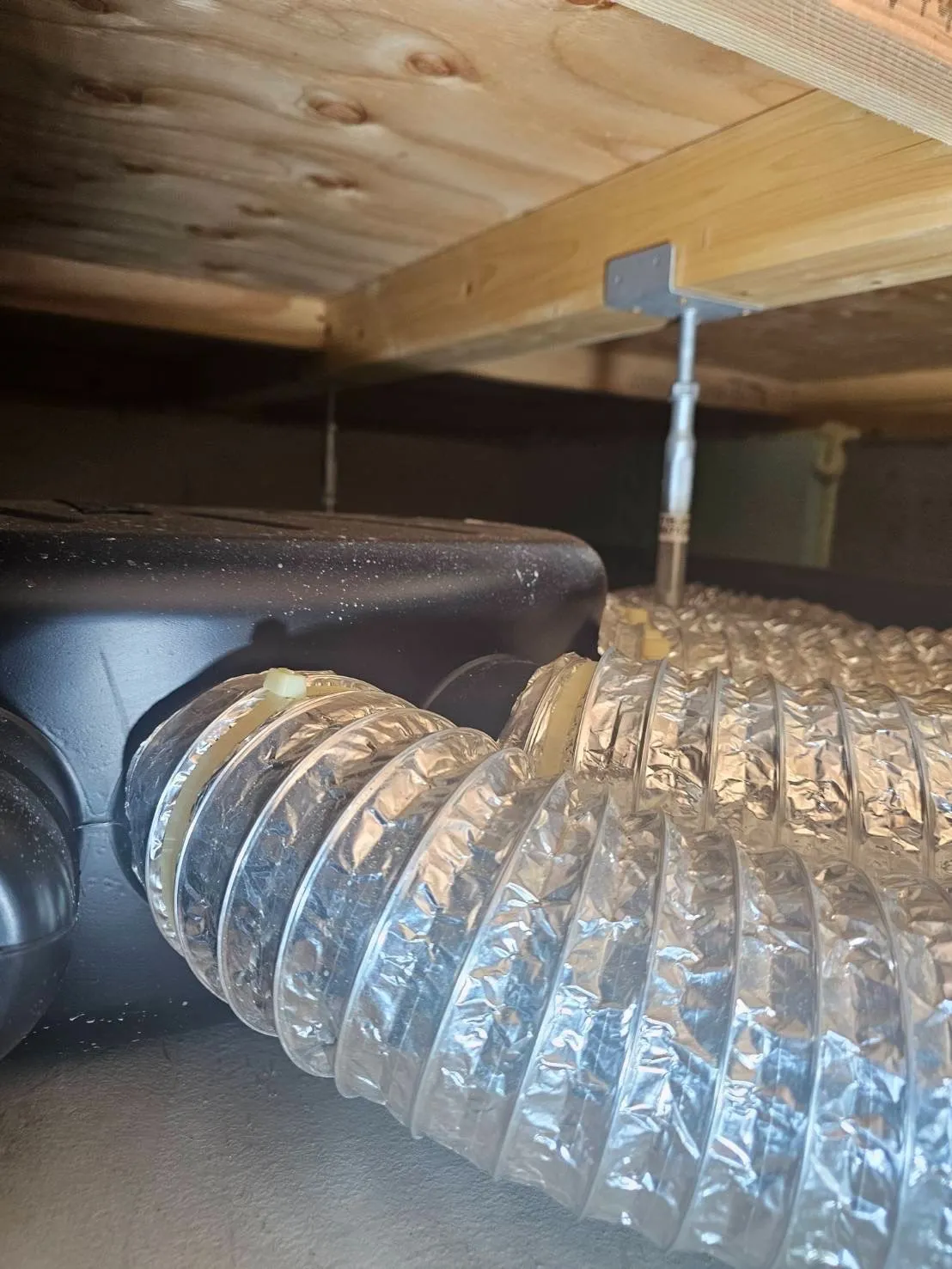
If the ventilation design cannot remove indoor humidity effectively, imbalances in airflow between rooms or poorly planned exhaust routes may cause moisture to flow back into wall cavities or ceiling voids. Proper exhaust design for high-moisture areas (bathrooms, laundry rooms, kitchens) is also essential. Additionally, ignoring duct routing, connection details, pressure differences, or stack effect during design may result in ventilation performance falling short of the plan, leading to moisture accumulation.
Ignoring interactions between HVAC and ventilation:
Heating and cooling systems alter indoor temperatures, which in turn affect humidity conditions. If ventilation is designed separately from HVAC and temperature planning, the result may be temperature and humidity differentials during operation, which can become triggers for condensation.
3. Construction-Stage Defects: Insulation and Airtightness Errors
Even with a solid design, sloppy construction can still lead to condensation and mold problems. Below are some typical examples of construction defects.
3-1. Insufficient Filling, Misalignment, and Gaps in Insulation
When installing insulation, it is crucial to place it exactly as designed without leaving any gaps. In practice, however, the following mistakes often occur:
Insulation is missing, floating, or leaving gaps around corners, beams, window frames, or piping areas.
Insulation is compressed too tightly, deforming the material and reducing its effectiveness while creating gaps.
Insulation is misaligned or sagging in certain sections.
Boards or panels used are thinner than the specified design thickness.
In multi-layer insulation systems, layers are poorly aligned or overlaps are insufficient.
These issues not only reduce the overall thermal performance but also create cold spots within the insulation layer. Such localized temperature drops increase the likelihood of condensation, which in turn provides favorable conditions for mold growth.
3-2. Overlooked Overlaps and Poor Sealing of Airtight Tapes and Sheets
The installation of airtight and vapor-control layers requires extremely detailed workmanship. The following mistakes are common sources of condensation risk:
Forgetting to overlap airtight tape, or leaving visible gaps.
Inadequate adhesion due to poor pressing, causing tape to peel or weaken over time.
Sloppy cutting or placement of sheets, leaving edges loose or unsealed.
Weak sealing at joints, corners, junctions with ceilings or floors, around window frames, and pipe penetrations.
Failing to reseal when new pipes or wiring are added later, leaving the vapor barrier interrupted.
Such mistakes create bypass routes that allow air and moisture to flow into the insulation layer, greatly increasing the likelihood of internal condensation.
3-3. Errors in Treating Pipe Openings, Penetrations, and Junctions
Pipes, ducts, and structural penetrations are weak points in airtight and insulation design. If these areas are not carefully handled, they easily become major causes of condensation and mold. Common mistakes include:
Leaving gaps around pipe or duct penetrations without proper sealing.
Failing to insulate or seal around electrical wiring conduits.
Not reapplying airtight tape or sealant after equipment changes or additional penetrations.
Insufficient sealing at junctions where walls meet floors, ceilings, or beams.
Using inappropriate sealants or tapes that deteriorate quickly.
These overlooked details create direct air leakage and moisture paths into wall cavities or ceiling spaces. Once warm, humid indoor air enters these cold spots, internal condensation occurs, which can quickly escalate into mold growth and material deterioration.
4. Real-World Case Studies: Wall and Ceiling Condensation Leading to Mold Damage
Condensation and Mold that Escalated the Damage: Causes and Background Revealed on Site
Case: Beam Corrosion and Mold Damage from Condensation Five Years After Completion
Case Overview
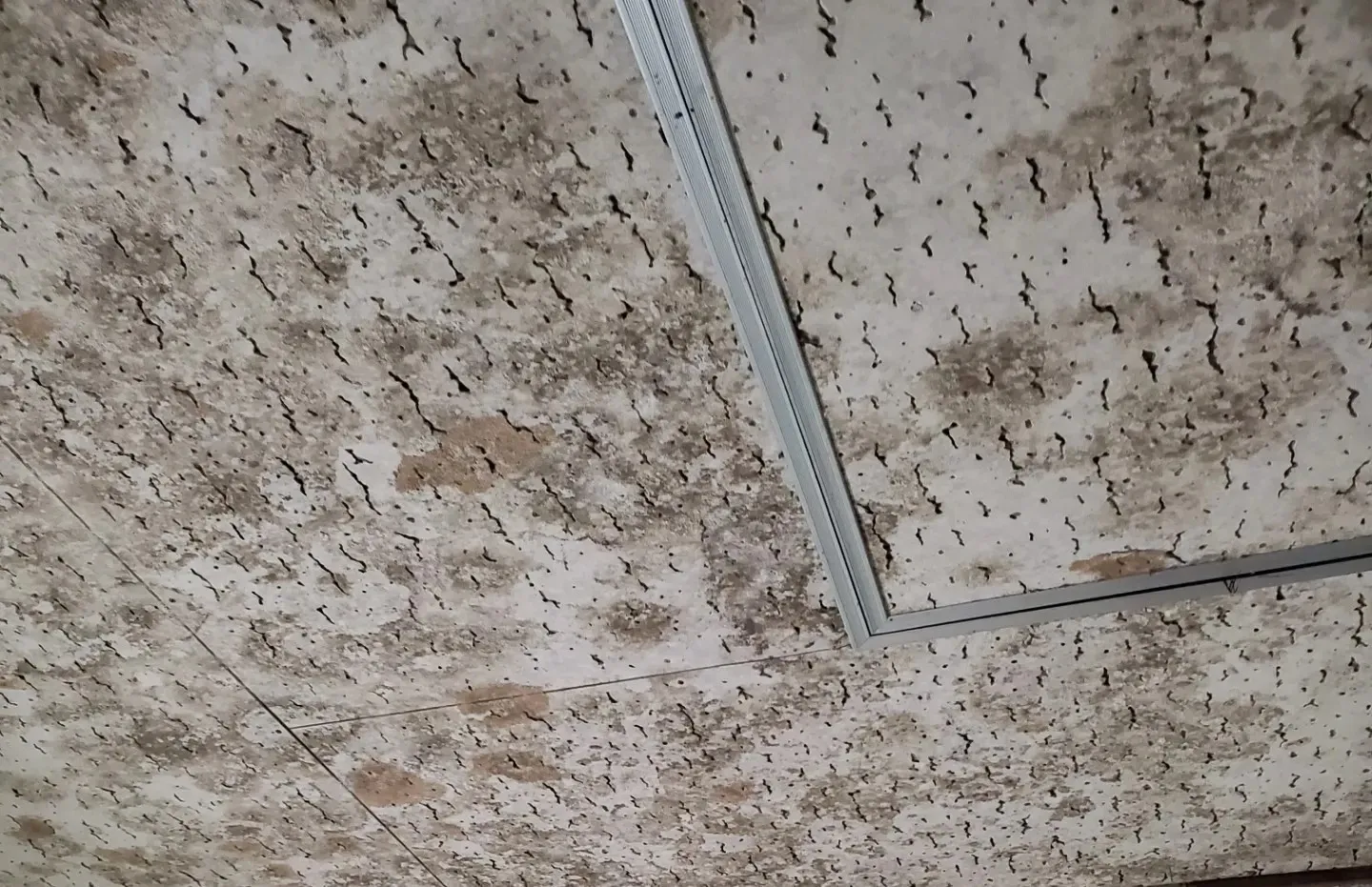
In a timber-frame house (two stories above ground with one basement level), multiple defects appeared about five years after completion. Condensation had progressed inside the ceiling cavities and wall assemblies, leading to corrosion and deterioration of internal structural members such as beams. In the worst cases, beams were found to be partially missing due to severe damage. Mold growth was also observed on wall and finishing materials, affecting the interior finishes.
Causes of the Problem
The main issues identified in this case were as follows:
A ceiling insulation method was used, but no ventilation was designed on the exterior side of the insulation layer.
No ventilation paths or vents were provided in the attic or behind the insulation, creating conditions where moisture easily accumulated.
Indoor sources of water vapor (heating, cooking, bathing, etc.) allowed moisture to penetrate into the insulation layer and attic space, where it condensed upon contacting cold surfaces.
Structural members and substrates were exposed to a persistently humid environment, leading to corrosion, deterioration, and mold growth.
Damage and Response
In this building, corroded beams and finishing materials were replaced, new attic vents were installed, and the insulation design was reviewed and modified.
This case demonstrates that “having insulation = safe and secure” is a misconception. Without coordination between insulation, ventilation, and moisture control design, severe problems such as internal condensation, mold, and structural deterioration can occur.
5. Preventive Design: A Design Philosophy to Eliminate Condensation
In architecture, condensation is a preventable problem that arises from flaws in design or construction. Considering that condensation leads to mold, decay, and a shortened building lifespan, preventive measures taken at the design stage are the most crucial factor. In this section, we will explain the design philosophy for preventing condensation in advance, along with specific countermeasures for each design element.
5-1. Insulation Design: Reducing Thermal Bridges, Ensuring Continuity, and Vapor Permeability
The foundation of condensation prevention lies in insulation design. The first step is to properly control the temperature difference between indoor and outdoor environments so that surfaces do not reach the dew point where condensation forms.
Above all, the continuity of the insulation layer must be guaranteed. If insulation is interrupted or uneven in thickness, those areas cool more quickly, creating “condensation points.” At the design stage, it is essential to eliminate thermal bridges at critical junctions such as roof-to-wall connections, wall-to-floor joints, around openings, and where beams or columns penetrate the insulation.
Next, thermal bridge mitigation is crucial. Steel frames, concrete elements, and metal plates conduct heat easily. When such materials pass through the insulation layer, they create areas significantly colder than their surroundings. To prevent this, designers must detail carefully to avoid breaks in the insulation, and in some cases consider double layers of insulation or thermal break materials.
Equally important is vapor permeability design. The degree to which insulation allows water vapor to pass through (its vapor resistance) directly affects whether moisture stagnates within the wall assembly. Proper design must account for the “flow of vapor”: moisture generated indoors should pass through the insulation layer and be released outdoors. The basic rule is to use low-permeability materials on the interior side and progressively higher-permeability materials toward the exterior—creating a proper “vapor gradient.”
5-2. Airtightness and Vapor Control: VCL, Vapor Barriers, and Layer Sequencing
Just as important as insulation is the concept of airtightness and vapor control. Poor airtightness allows moisture to bypass insulation and enter wall cavities, causing internal condensation. Likewise, inadequate vapor control permits indoor humidity to penetrate insulation, reducing its performance and creating a high risk of mold growth within the walls.
The most common measure is to install a VCL (Vapor Control Layer)—a vapor-tight sheet—on the interior side of the insulation. Its role is to block indoor humidity from migrating into the wall assembly. The key is continuous, gap-free installation. Even small holes or poorly sealed seams become entry points for moisture.
At the design stage, attention must be given to layer sequencing. Vapor barriers belong on the warm, interior side, while vapor-permeable weather barriers are placed on the exterior. If this order is reversed, moisture will accumulate inside the wall with no escape path, creating severe condensation risks.
If the vapor control layer and airtight layer are separate components, drawings must clearly show their placement and ensure continuity. Details such as edge treatments, junctions between walls, ceilings, and floors, and around openings must be designed so airtight sealing can be performed reliably on site.
Designers must also address penetrations for pipes and electrical wiring. These are common “leak points” in airtight construction. If left untreated, they become direct routes for moisture to infiltrate the insulation layer.
In short, insulation, airtightness, vapor control, and vapor permeability must be designed as an integrated system. If even one of these is missing, the risk of condensation increases significantly. Preventive design philosophy therefore means holistic environmental design, where all four elements are coordinated to eliminate condensation risks.
6. Mold Recurrence Prevention and Condensation Control with the MIST Method
Mold caused by condensation cannot be completely removed with surface cleaning alone. Mold that penetrates into wall cavities or ceiling spaces tends to recur, severely affecting not only the building’s appearance and durability but also the health of its occupants. This is where the “MIST Method®,” a proprietary technology developed by our team at Kabibusters, comes into play. In this section, we explain the technical features of the MIST Method and detail its specific application process for preventing the recurrence of condensation and mold problems.
6-1. What Is the MIST Method? A Technology for Removing Mold at Its Roots Without Damaging Materials
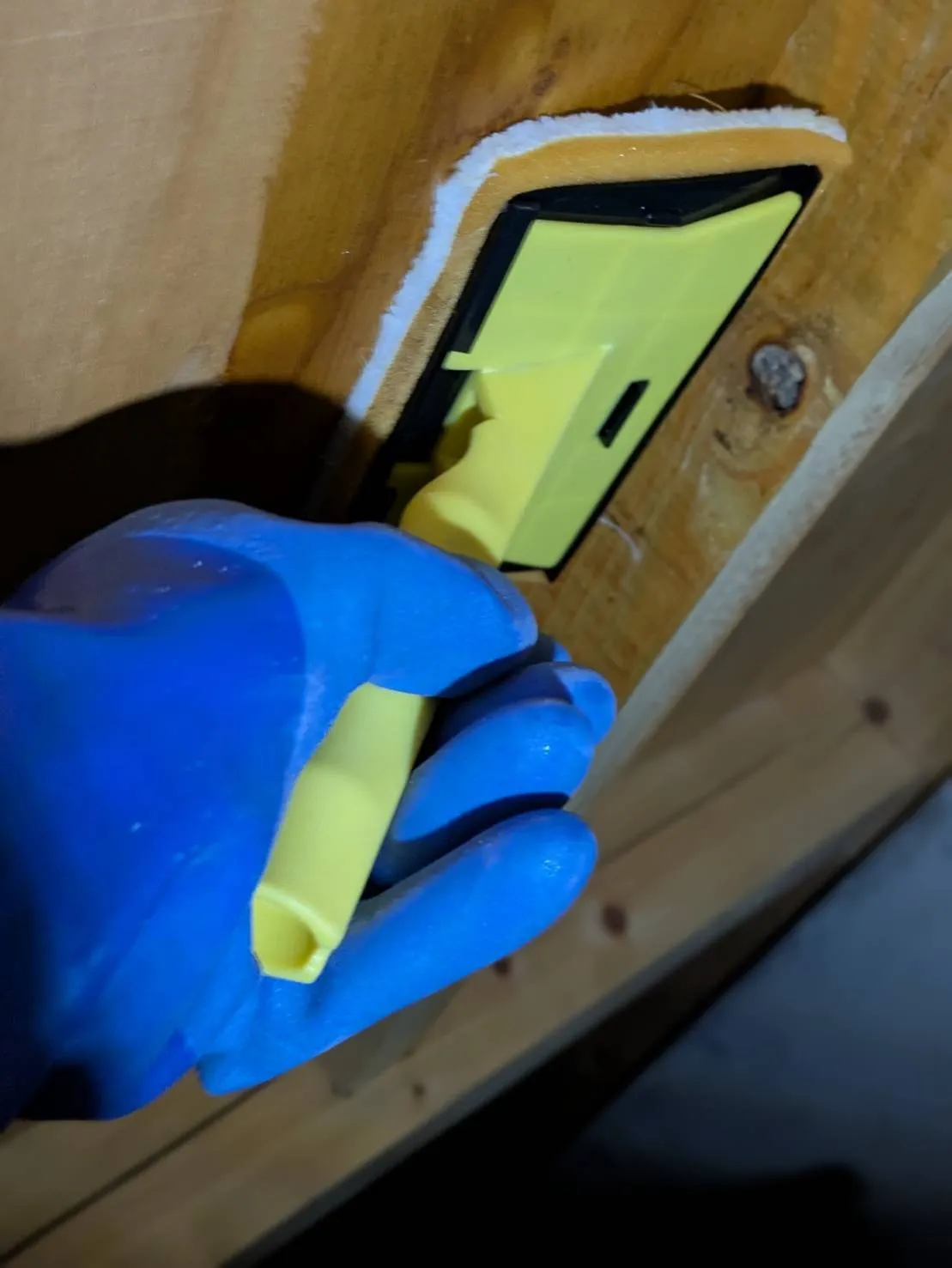
Unlike conventional mold removal methods, the MIST Method® is characterized by the fact that it does not involve scrubbing or scraping and therefore does not damage the underlying material. Instead, a specially formulated mold-removal agent is atomized into a fine mist, which penetrates deeply into the material to decompose and eliminate mold at its roots.
One of its most notable strengths is that the MIST Method can adjust the concentration and composition of the agent according to the type and condition of the material. This makes it suitable for a wide variety of substrates—wood, stone, wallpaper, plasterboard, concrete, and more—allowing safe and effective treatment across homes, commercial spaces, facilities, and even historical buildings.
Additionally, the agents used are composed of ingredients that are safe for both humans and the environment. This makes the MIST Method particularly valuable for facilities used by children, the elderly, or other sensitive groups.
6-2. Why the MIST Method Is Effective for Preventing Condensation and Mold Recurrence
The MIST Method not only removes existing mold but also incorporates processes aimed at preventing recurrence. Through the following steps, it breaks the cycle of mold growth at its root:
Mold Removal with Mist Application:
A fine mist of the specialized agent is sprayed, allowing it to penetrate beyond the material’s surface into its deeper layers. This eliminates mold colonies not only on the surface but also at the root level.
Disinfection (Elimination of Airborne Mold):
Mold spores floating in the air can settle again and trigger new growth. The MIST Method includes air disinfection, removing airborne spores to reduce the chance of recontamination.
Anti-Mold Treatment (Finishing Process):
An antimicrobial agent with long-lasting mold-inhibiting effects is applied as a finishing step, creating a protective barrier. This ensures that even if condensation occurs, mold is far less likely to adhere and spread.
Environmental Measures Against Condensation:
Depending on site conditions, additional improvements—such as enhanced insulation or ventilation—may also be recommended and implemented. This holistic approach ensures not just “mold removal” but a comprehensive strategy focused on “preventing recurrence.”
In this way, the MIST Method goes beyond simple mold removal. It addresses the root causes of mold and condensation while ensuring long-term prevention. For construction companies and designers facing condensation- and mold-related problems caused by design or construction errors, it serves as a highly reliable ultimate solution.
For Mold Removal and Prevention, Consult “Kabi Reform Tokyo & Nagoya” or “Kabibusters Osaka.”
Problems with condensation and mold inside a building, if left untreated, can lead to material deterioration, structural decay, and even health risks for occupants. While the ideal solution is to prevent these issues at the design and construction stages, in reality mold troubles occur in many buildings—both new and existing.
In such cases, you can rely on “Kabi Reform Tokyo & Nagoya” and “Kabibusters Osaka.”
Using our proprietary MIST Method®, we remove mold at its roots without scrubbing, scraping, or damaging the material. Beyond removal, we are committed to thoroughly preventing recurrence. Our method delivers powerful sterilization while also being safe for humans and the environment, with a proven track record in childcare facilities, medical institutions, and senior residences.
We handle all types of materials—including wood, concrete, plaster, and tile—adjusting the treatment according to each substrate’s properties. After mold removal, we provide air disinfection and anti-mold finishing treatments, and when necessary, we also propose and implement improvements in insulation and ventilation. Our trained specialists combine precise on-site assessments with advanced expertise to ensure long-term prevention.
If you are in the Kanto region, please contact “Kabi Reform Tokyo & Nagoya”; if you are in Kansai, reach out to “Kabibusters Osaka.” From on-site inspections to treatment and aftercare, we are your best partner in protecting the health and longevity of your building.
---------------------------------------------------------------------
カビ取リフォーム
東京営業所
〒141-0022
東京都品川区東五反田2-5-2 YHE CASK GOTANDA6階
電話番号:090-8321-4408
名古屋本社
〒465-0028
愛知県名古屋市名東区猪高台1-1301 タイコウビル1F
電話番号 : 0120-588-766
サイト:https://taikou-kensou.co.jp/
大阪営業所
〒532-0003
大阪府大阪市淀川区宮原1-19-23
電話番号:080-6978-3068
カビバスターズ大阪
https://kabibusters-osaka.com/
【検査機関】
一般社団法人微生物対策協会
https://kabikensa.com/
----------------------------------------------------------------------