"Complete Mold Removal & Renovation Guide for Shopping Malls: Cladosporium, Blue Mold, and Aspergillus in Commercial Spaces"
2025/09/25
Have you ever noticed black stains or spots on the ceiling or walls of a shopping mall or store? That could be a sign of black mold, blue mold, or aspergillus silently spreading in the building. If left untreated, they can severely impact hygiene, safety, and the image of your facility.
This article explores the types of mold typically found in commercial facilities, the common areas where they grow, the environmental conditions that trigger outbreaks, and details our one-stop solution that combines mold removal and renovation.
By reading this, facility owners and managers will gain insight into what areas to inspect first, what countermeasures are most effective, and how to partner with a professional service provider to implement sustainable and cost-effective mold prevention strategies.
1. Mold in Commercial Facilities: A Direct Risk to Profits, Image, and Safety
Mold growth in commercial spaces isn’t just a matter of cleanliness—it directly threatens a facility’s reputation, customer satisfaction, and even operational continuity. Especially in high-traffic areas like shopping malls and large stores, molds such as Cladosporium (black mold), blue mold, and aspergillus can cause visual damage, unpleasant odors, and health risks. Quick identification and response are essential.
1-1. Why Commercial Facilities Are at Higher Risk of Mold Than Homes
Compared to residential buildings, commercial facilities face a higher risk of mold due to the constant foot traffic, complex layouts, and varied environmental conditions. Large-scale HVAC systems, extensive piping, and poorly ventilated spaces like ceiling voids and storage areas create ideal environments for mold to thrive unnoticed.
Additionally, areas with frequent water use—such as food courts, restrooms, and kitchens—are particularly vulnerable to moisture accumulation and hidden mold growth. Unlike homes, the vast size and divided zones in commercial properties make it harder to detect early signs, allowing mold to spread silently over time.
1-2. How Cladosporium, Blue Mold, and Aspergillus Impact Facility Operations
Once mold becomes visible, it can damage a facility’s public image almost instantly. Customers noticing mold stains on ceilings or walls may associate the space with poor hygiene, leading to a drop in repeat visits. If images circulate online, reputational damage can escalate rapidly.
Beyond appearance, airborne mold spores—especially from Cladosporium and Aspergillus—can cause respiratory issues, potentially affecting both staff and visitors. In severe cases, health complaints may lead to operational restrictions or legal consequences.
Moreover, when mold penetrates into building materials, restoration costs can skyrocket, and prolonged closures may be necessary. Early action can prevent these financial and operational losses.
2. Types of Mold: Cladosporium (Black Mold), Blue Mold, and Aspergillus
In commercial spaces, several mold species are commonly found—each with different appearances, health risks, and environmental preferences. Understanding their characteristics is essential for effective mold detection, removal, and long-term prevention.
2-1. Characteristics and Conditions of Cladosporium (Black Mold)
Cladosporium, often referred to as black mold, is one of the most frequently encountered types in commercial environments. It typically appears as black or dark brown spots on ceilings, walls, air ducts, and around HVAC vents.
This mold thrives in damp, poorly ventilated spaces, especially where condensation frequently occurs. It feeds on dust, organic matter, and building materials, making neglected or hard-to-clean areas its prime breeding grounds.
Cladosporium also releases large numbers of airborne spores, which can irritate the respiratory system and trigger allergic reactions—posing serious health concerns in public spaces like shopping malls and restaurants.
2-2. Where Blue Mold and Aspergillus Tend to Grow
Blue mold, often part of the Penicillium genus, has a greenish-blue hue and is commonly associated with spoiled food. However, it can also colonize damp building materials such as wood, wallpaper, and air filters. Its spores spread easily through the air and can quietly infest large areas if unnoticed.
Aspergillus, including varieties commonly known as “koji mold” in Japan, appears in pale green or grayish patches and reproduces rapidly under warm, humid conditions. It often grows in dusty or dirty areas with limited airflow—such as inside ceiling cavities, around HVAC systems, or behind walls.
Inhalation of Aspergillus spores may cause allergic reactions or even more serious respiratory conditions, particularly in sensitive individuals. In large-scale facilities, the mold can spread through the air circulation system, making early detection and containment especially critical.
3. Common Mold Hotspots in Shopping Malls and Stores
Commercial facilities often have multiple hidden areas that create the perfect environment for mold growth. Due to their size and complexity, shopping malls and retail stores are especially prone to unnoticed mold outbreaks. Identifying these hotspots is key to effective prevention and early intervention.
3-1. Ceilings, HVAC Ducts, Equipment Rooms, and Overhead Spaces
In large commercial buildings, HVAC systems and electrical wiring are usually installed in ceiling cavities or overhead utility spaces. These areas are warm, poorly ventilated, and prone to condensation—making them highly susceptible to mold, especially black mold like Cladosporium.
Air ducts in particular are frequent problem zones, as condensation forms easily around them and spreads moisture to surrounding insulation or materials.
Since these overhead spaces are rarely accessed, mold can go undetected for long periods. If left untreated, spores can circulate through the HVAC system and spread throughout the facility, posing health risks and contaminating other areas.
3-2. Behind Walls, Under Floors, and Around Plumbing
Hidden areas such as wall interiors, crawlspaces, and underfloor voids are also common breeding grounds for mold. Leaks, condensation, and humidity buildup—especially around plumbing systems near kitchens, restrooms, and utility rooms—can lead to hidden moisture accumulation.
Even if walls and floors appear clean, mold may be growing beneath the surface, feeding on insulation, adhesives, or dust trapped behind materials.
Drainage areas and pipe joints are also vulnerable, as they collect organic matter and retain moisture, creating ideal conditions for blue mold or aspergillus to thrive. Because these areas are difficult to inspect without specialized tools, professional assessment is often required for accurate detection.
4. Understanding Environmental Factors That Cause Mold Growth
Mold growth doesn’t occur from moisture alone. Multiple environmental factors—such as temperature, humidity, ventilation, and the presence of organic matter—combine to create ideal conditions for mold to develop and spread. Understanding these factors and conducting regular inspections is essential for long-term mold prevention.
4-1. Humidity, Temperature Changes, Condensation, and Ventilation
Mold thrives in environments with humidity above 70% and temperatures between 20–30°C (68–86°F). In commercial facilities, human traffic, temperature control systems, and daily operations can cause fluctuations that lead to condensation and trapped moisture.
Areas near HVAC systems or food preparation zones are especially at risk, as they often experience sharp temperature differences, resulting in condensation buildup within ceiling voids or wall cavities.
Poor ventilation worsens the problem by allowing humidity to accumulate, giving mold the stable, moist environment it needs to grow. The key to prevention is balanced air circulation and proactive humidity management across all zones of the facility.
4-2. Mold Nutrients: Dust, Organic Matter, and Airflow Issues
In addition to moisture, mold needs a nutrient source—such as dust, grease, food residue, wallpaper glue, or cellulose-based materials—to grow. Commercial kitchens, food courts, and poorly maintained corners of retail stores are especially vulnerable.
Blue mold and aspergillus, in particular, flourish in areas with organic buildup and stagnant air.
When airflow is restricted, mold spores tend to settle and germinate more easily. Lack of regular cleaning and dust removal creates the perfect condition for colonization.
Implementing routine cleaning protocols, ensuring proper airflow, and addressing small leaks or spills quickly are all essential to keeping mold at bay in high-traffic environments.
5. Our Integrated Mold Removal + Renovation Service
In most commercial cases, mold removal and renovation are handled separately by different contractors—resulting in higher costs, longer timelines, and inconsistent results. At Taiko Kensou Co., Ltd., we offer a comprehensive, one-stop service that handles both mold remediation and interior restoration, ensuring efficient and seamless solutions tailored to the needs of commercial facilities.
5-1. On-Site Assessment and Customized Mold Removal Planning
Every project begins with a professional on-site inspection conducted by our mold specialists. We thoroughly examine visible mold as well as invisible risk areas such as air quality, hidden moisture, insulation condition, and ventilation performance.
Based on the assessment, we provide a detailed, customized mold removal and renovation plan, considering your facility layout, operating hours, and budget.
Whether addressing small-scale surface mold or deep-seated infestations, we create solutions that minimize business disruption—including after-hours work and phased, zoned construction.
5-2. MIST Method® for Safe Removal + Restoration Work
Our proprietary MIST Method® allows for powerful, deep-penetrating mold removal without damaging materials. Instead of scrubbing or scraping, we apply a specially formulated anti-mold mist that safely breaks down mold at its roots—even on delicate surfaces like wood or wallpaper.
After removal, we proceed with renovation and repairs, such as wall replacements, ceiling restoration, waterproofing, and anti-mold finishing.
This integrated approach not only eliminates mold but also restores visual appeal, functionality, and structural safety, saving you time and money compared to hiring multiple contractors.
6. Considerations in Commercial Facility Mold Treatment
Unlike residential settings, mold removal and renovation in commercial facilities require a more nuanced approach. Minimizing disruption to business operations, ensuring customer safety, and preserving the aesthetic of the space are all critical. Our team at Taiko Kensou Co., Ltd. takes these unique needs into full account when planning and executing projects.
6-1. Night-Time Work, Zoning, and Business-Friendly Scheduling
In malls and retail stores, noise, odor, or contractor movement during business hours can negatively impact customer experience. That’s why we offer after-hours or early morning construction services to ensure minimal impact on your operations.
Additionally, we apply zoning techniques to divide the project into manageable sections, allowing you to continue business as usual in unaffected areas.
We work closely with your management team to coordinate schedules, safety measures, and communication strategies that align with your business needs.
6-2. Material Selection, Durability, Mold Resistance, and Aesthetic Finish
Commercial interiors must not only be safe and functional, but also visually appealing. We carefully select materials that are durable, mold-resistant, and suitable for high-traffic environments.
Whether replacing wall coverings, ceiling panels, or flooring, we ensure that the finishes blend seamlessly with your existing design.
We also consider factors such as light reflection, acoustics, and ease of cleaning to provide a final result that is both visually pleasing and practical.
Our goal is to deliver a result that makes you forget mold was ever there—while ensuring it never comes back.
7. Strategies for Long-Term Mold Prevention and Maintenance
Even after mold has been removed, it can return if the root causes are not addressed. In commercial facilities where people constantly come and go, maintaining a mold-free environment requires ongoing vigilance, proactive treatment, and structured maintenance. Our approach combines technology, protective coatings, and scheduled monitoring for sustainable results.
7-1. Anti-Mold Coatings, Antibacterial Treatments, and Surface Protection
After removal, we apply specialized anti-mold treatments to prevent future growth. Using our MIST Method®, we introduce fine mist agents that penetrate deep into materials to eliminate unseen mold roots while leaving a protective anti-microbial layer on the surface.
We can also apply antibacterial and anti-fungal coatings to walls, ceilings, and other vulnerable surfaces. These coatings reduce the risk of mold spore attachment and make routine cleaning more effective, helping to preserve the space's aesthetic and hygiene over time.
7-2. Regular Inspections, Environmental Monitoring, and Cleaning Support
Long-term mold control depends on continuous monitoring and consistent maintenance. We offer scheduled environmental inspections that include checks for humidity levels, condensation risk, and early signs of mold recurrence.
For on-site cleaning teams, we can provide best-practice training and custom cleaning guides focused on mold prevention—covering techniques for removing dust, managing moisture, and spotting early indicators.
By combining environmental data with human oversight, we help clients maintain safe, clean environments while reducing the risk of costly re-infestations.
8. Case Studies and Results
Our integrated mold removal and renovation services have been successfully implemented in various commercial facilities, delivering measurable improvements in safety, appearance, and operational efficiency. Below is a real-world example illustrating the impact of our approach.
8-1. Real Example: Mold Treatment in a Shopping Mall
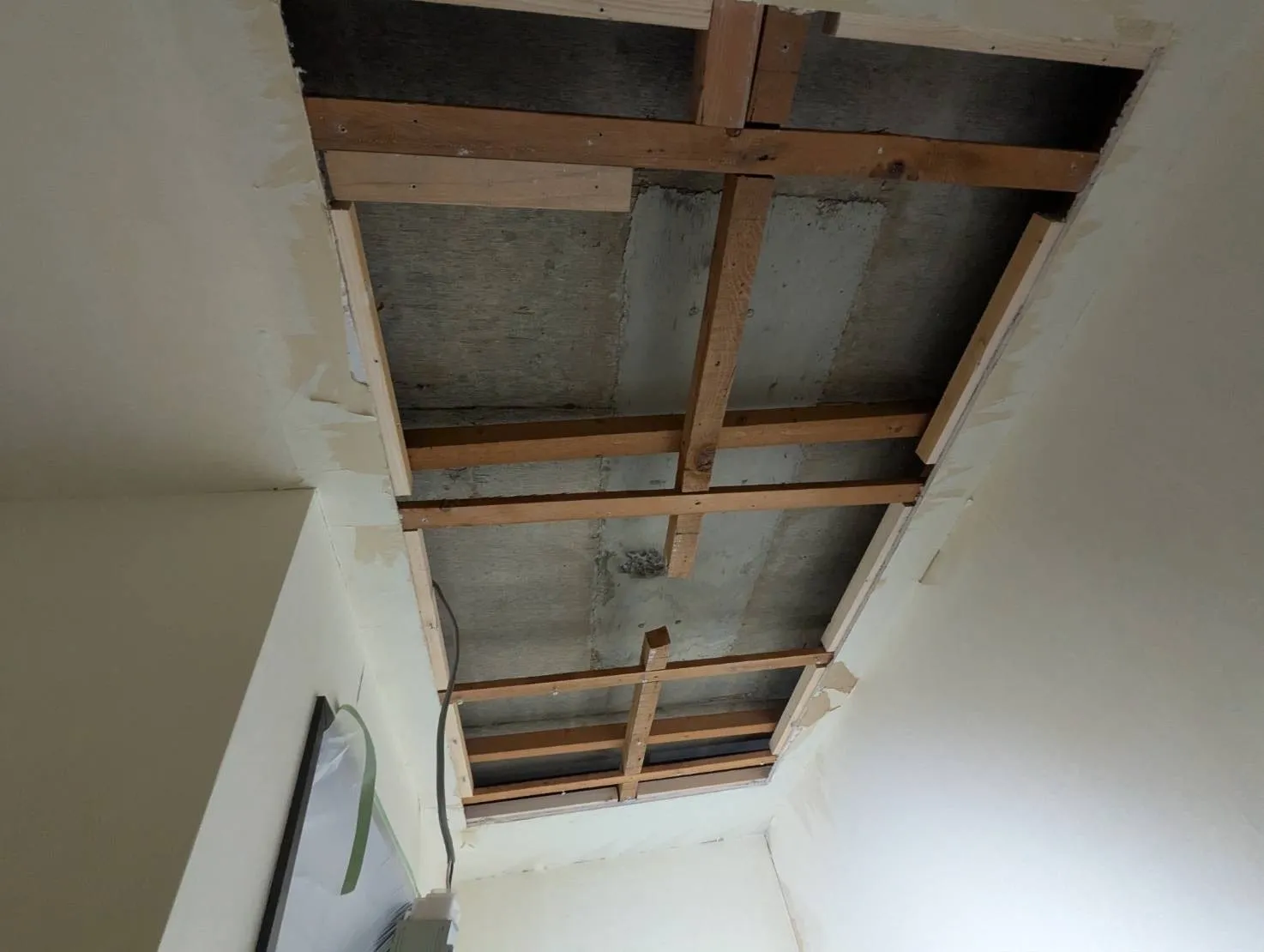
At a large shopping mall in Tokyo, black mold (Cladosporium) was discovered in the ceiling space above a food court. Condensation around HVAC ducts had caused moisture to accumulate in the insulation, creating a breeding ground for mold.
Our team conducted a detailed inspection of the ceiling cavity and surrounding HVAC system. Based on the findings, we applied the MIST Method® to safely remove the mold without dismantling major infrastructure. We then replaced deteriorated ceiling panels and performed a targeted anti-mold treatment.
Before-and-after images showed a dramatic improvement: black stains, odor, and air quality issues were all eliminated, restoring a clean and welcoming environment.
8-2. Measurable Benefits: Humidity Control, Zero Recurrence, and More
Following the treatment, humidity levels in the ceiling area dropped from 75% to 55%, thanks to improved airflow and the anti-mold coating. Even one year after the intervention, no mold recurrence has been observed.
The facility also saw a significant reduction in customer complaints related to odor or indoor air quality. Maintenance staff reported easier cleaning routines and fewer reports of visible stains.
From an operational standpoint, the client praised the process for minimizing business disruption and improving the long-term durability of the facility. The investment in mold treatment led to cost savings on future repairs and greater customer satisfaction.
9. Cost, ROI, and Budgeting for Mold Removal + Renovation
Mold removal and renovation in commercial facilities come with costs—but when approached strategically, the return on investment can be significant. Addressing mold proactively prevents larger structural damage, operational disruptions, and reputation loss. This section outlines typical costs and how to assess the value of intervention.
9-1. Price Estimates by Scope and Severity
The total cost of mold removal and renovation depends on multiple factors, including mold type, affected area, building material, and accessibility.
For minor surface treatments and wall repairs, typical costs range from ¥100,000 to ¥300,000.
Larger-scale interventions involving ceiling cavities, ductwork, or extensive material replacement may range from ¥500,000 to over ¥1,500,000, depending on the project scope.
At Taiko Kensou Co., Ltd., we begin with an on-site evaluation and then provide a tailored project proposal that balances budget, operational needs, and long-term performance.
9-2. ROI: Prevented Losses, Improved Environment, and Facility Value
When evaluating mold remediation costs, it’s essential to consider the potential losses from inaction.
If mold is left untreated, it can cause structural damage, requiring large-scale repairs and even temporary business closures.
Furthermore, mold odors or visible damage can reduce foot traffic, affect customer loyalty, and even result in health complaints—damaging both reputation and revenue.
By investing in a comprehensive mold removal + renovation solution, facilities can avoid these risks, extend the lifespan of interiors, and reduce future maintenance costs.
This approach is not just an expense—it's a strategic investment in the health, safety, and long-term success of your facility.
10. Conclusion and Consultation Contact
Mold doesn't disappear on its own. In commercial facilities, it often spreads unnoticed in ceilings, behind walls, or around water systems—causing damage that affects your brand image, operations, and customer trust. Taking early, comprehensive action is the key to long-term protection.
10-1. First Steps for Facility Owners to Prevent Mold Now
For facility managers and owners, the first step is to understand your current risks. Even if no visible mold is present, hidden areas such as HVAC systems, wall cavities, and ceiling voids may already be compromised.
Identifying and addressing environmental triggers—like excess humidity, poor airflow, or water leaks—can stop mold before it becomes a serious issue.
Our experts provide comprehensive assessments tailored to your facility's layout and operational conditions, helping you choose the most effective removal and renovation strategy.
10-2. How to Get Expert Diagnosis and Start Your Action Plan
At Taiko Kensou Co., Ltd., we offer detailed mold assessments and professional consultations. Our specialists will inspect your facility, identify mold types and affected areas, and evaluate risk factors such as humidity, building materials, and air quality.
We then propose a tailored “Mold Removal + Renovation Plan”, addressing both immediate removal and long-term prevention.
Anti-mold treatments, moisture control solutions, and optional maintenance programs are available based on your facility's needs.
With experience in handling shopping malls, stores, and large-scale buildings, our team ensures a smooth, effective, and minimally disruptive process—from diagnosis to completion.
Take the proactive step today and protect your facility from hidden threats. Reach out to Taiko Kensou Co., Ltd. to begin your mold-free transformation.
Mold Solutions & Renovation by Kabi Busters Osaka and Kabi Reform Tokyo/Nagoya
In commercial environments, solving mold problems requires more than just cleaning—it demands a comprehensive strategy that addresses root causes and restores both safety and aesthetics.
That’s why Taiko Kensou Co., Ltd. offers an integrated service that combines advanced mold removal with professional renovation, available under our regional brands:
Kabi Busters Osaka (serving the Kansai region)
Kabi Reform Tokyo/Nagoya (serving the Kanto and Tokai regions)
Our proprietary MIST Method® eliminates mold deep within materials while preserving delicate surfaces. This technique is safe, effective, and ideal for commercial facilities where minimizing structural damage and business disruption is essential.
Once mold is removed, our skilled renovation team restores the affected areas—replacing ceilings, walls, and interior materials as needed, using high-quality, mold-resistant components.
About Taiko Kensou Co., Ltd.: One-Stop Mold Removal & Renovation Experts
Taiko Kensou Co., Ltd. is a leading Japanese company specializing in both renovation and mold remediation, offering a rare one-stop solution for commercial facilities.
Unlike typical contractors who handle only one aspect of the problem, we provide a fully integrated approach—from diagnosis and treatment to reconstruction and preventive care.
Our renovation division handles everything from small interior repairs to full-scale remodeling of stores, restaurants, offices, and multi-tenant buildings. We focus on:
Durability and hygiene
Aesthetic harmony with existing interiors
Functionality suited to high-traffic environments
Night-time and zoned construction for operational continuity
By combining mold expertise with construction capability, we help facility managers maintain a clean, safe, and visually appealing environment, ensuring that the space remains healthy and business-ready for years to come.
If you are managing a facility facing mold issues—or want to prevent them proactively—contact Taiko Kensou Co., Ltd. today to discuss a tailored solution.
---------------------------------------------------------------------
カビ取リフォーム
東京営業所
〒141-0022
東京都品川区東五反田2-5-2 YHE CASK GOTANDA6階
電話番号:090-8321-4408
名古屋本社
〒465-0028
愛知県名古屋市名東区猪高台1-1301 タイコウビル1F
電話番号 : 0120-588-766
サイト:https://taikou-kensou.co.jp/
大阪営業所
〒532-0003
大阪府大阪市淀川区宮原1-19-23
電話番号:080-6978-3068
カビバスターズ大阪
https://kabibusters-osaka.com/
【検査機関】
一般社団法人微生物対策協会
https://kabikensa.com/
----------------------------------------------------------------------