Design and Construction Checklist to Prevent Underfloor Mold Problems
2025/09/19
Thank you for visiting our blog today.
Mold in the underfloor space tends to develop in areas that are not visible, yet it has a significant impact on the durability of the building and the living environment. If discovered after construction, it can lead to complaints and costly repairs, posing a serious risk for builders. Precisely because it is a hidden part of the building, proper understanding and preventive measures from the design stage are essential.
In this article, we will outline the causes of underfloor mold, its impact on buildings and living environments, and the legal and financial risks of leaving it untreated. We will also provide detailed explanations of practical preventive measures and checkpoints that builders can implement at each stage—design, construction, and handover.
By reading this article, you will gain knowledge to prevent underfloor mold problems in advance and reduce the risk of disputes after handover. It will also help you achieve higher-quality construction and acquire practical know-how to build trust with clients.
1. What Are Underfloor Mold Problems? Essential Knowledge Every Builder Should Know
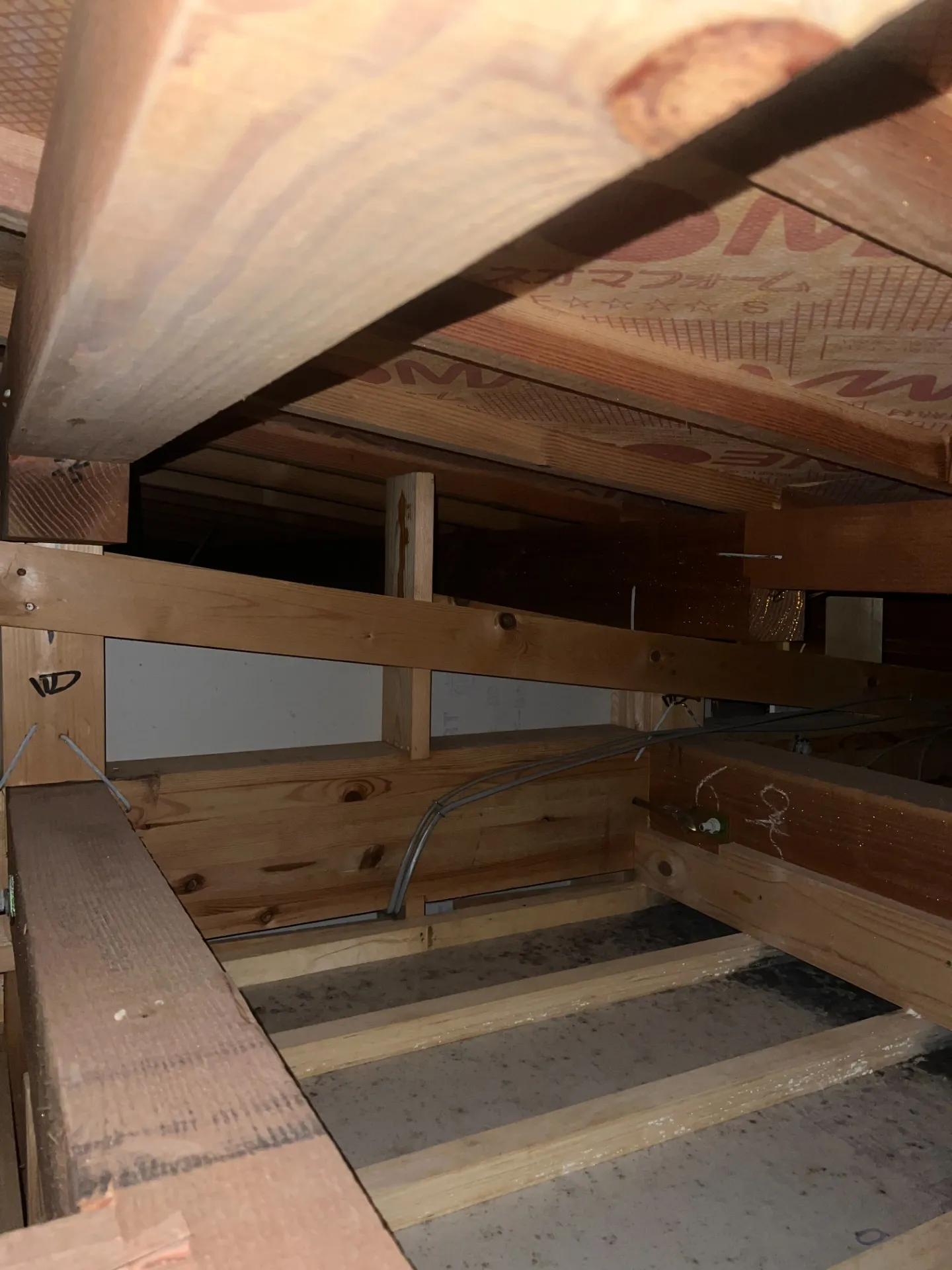
Although the underfloor space is rarely visible in daily life, it plays a critical role in supporting both the durability of a building and the comfort of the living environment. When moisture and mold develop there, they can lead to the deterioration of wood and insulation materials, the degradation of indoor air quality, and even serious risks such as legal claims. For builders, it is essential to correctly understand underfloor mold problems and to implement preventive measures during the design and construction stages in order to ensure quality control and maintain client satisfaction.
1-1. Why Is the Underfloor Space Prone to Mold?
The underfloor area is close to the ground and experiences significant temperature differences with the outside air, making it an environment where condensation can easily occur. In addition, moisture continuously rises from the foundation concrete and the soil, further contributing to dampness. If there is a lack of ventilation openings or defects in the vapor barrier sheet, insufficient consideration during the design or construction stage will cause humidity to accumulate, creating ideal conditions for mold growth. Mold spreads rapidly when humidity exceeds 70% and the temperature ranges between 20–30°C, making the rainy season and summer particularly high-risk periods.
1-2. Why Hidden Areas Require Special Attention
Because the underfloor space is rarely visible to residents, mold growth often goes unnoticed and left untreated until the damage becomes extensive. In reality, however, it can lead to problems such as wood decay, deterioration of insulation, warping of floor materials, and unpleasant odors. For builders, maintaining quality even in “invisible areas” is essential for earning trust. Even if the visible finish looks perfect, widespread mold beneath the floor can shorten the building’s overall lifespan and ultimately result in liability issues for the contractor.
2. Main Causes of Underfloor Mold Growth
Underfloor mold problems are not a matter of chance; in most cases, they stem from issues in design, construction, or environmental conditions. By correctly understanding the causes, it is possible to prevent them before they occur. In this section, we will explain the most common factors.
2-1. Moisture Accumulation Caused by Poor Ventilation
The most important factor in controlling underfloor moisture is proper ventilation design. If the number or placement of vents is inadequate and airflow cannot be created, moisture tends to stagnate beneath the floor. This is particularly problematic in strip foundations where vent openings are unevenly distributed, or when obstacles around the building block airflow. In addition, when foundation insulation methods are used to seal the underfloor space, trapped humidity has no escape route, leading to condensation and mold growth.
2-2. Increased Humidity from Pipe Leaks or Construction Defects
Since water supply and drainage pipes run through the underfloor space, even a small leak can cause humidity levels to rise rapidly. Minor leaks often go unnoticed by residents and remain unaddressed for long periods, creating ideal conditions for mold and wood-decaying fungi. Furthermore, construction defects such as poorly overlapped vapor barriers or insufficient curing after concrete placement can also trap moisture under the floor. For builders, thorough management during the construction stage is absolutely critical.
2-3. Foundation Insulation Methods and Condensation Risks
Foundation insulation methods, commonly used in airtight and highly insulated homes, treat the underfloor space as part of the interior, offering excellent thermal performance. However, when condensation forms on the surface of cold foundation concrete, it creates an environment where mold easily develops on insulation materials and wood components. Gaps in insulation or poor air-sealing further increase localized humidity, significantly raising the risk of mold damage.

3. The Impact of Underfloor Mold on Buildings and Living Environments
When mold develops in the underfloor space, it creates more than just an aesthetic issue—it negatively affects the durability of the building, the health of its occupants, and even the property’s market value. Below, we outline the main impacts.
3-1. Deterioration of Structural Materials and Loss of Strength
Mold that develops in the underfloor space eventually promotes the growth of wood-decaying fungi and termites. When essential structural components such as sill plates or floor beams become damaged, the building’s overall strength is reduced, directly impacting safety. Since decayed wood is difficult to repair, remediation often requires costly reconstruction or even full replacement, underscoring the critical importance of prevention.
3-2. Indoor Environment and Health Hazards
Mold spores can float through the air and enter living spaces via gaps in the flooring. This increases the risk of residents developing allergic reactions or asthma. In addition, the distinctive musty odor of mold can spread throughout the home, greatly diminishing comfort. Builders must recognize that hidden underfloor mold problems are directly connected to the health and well-being of occupants.
3-3. Inducing Termite Infestations
A damp underfloor environment provides ideal conditions for termites. Wood already affected by mold or wood-decaying fungi is especially vulnerable to termite damage, which can then spread rapidly. Because mold and termites often cause problems together, mold prevention is also an essential part of effective termite control.
4. Risks of Leaving Underfloor Mold Untreated
Leaving underfloor mold unaddressed allows the damage to spread over time, significantly increasing repair costs. For builders, it also leads to legal liabilities and a decline in client trust. Below, we examine the key risks in detail.
4-1. Repair Costs and Decline in Property Value
Once mold has developed in wood, simply wiping the surface is not enough—if fungi have penetrated deeper, the affected components often need to be replaced. When structural members such as sill plates or floor beams are compromised, large-scale repairs or renovations may be unavoidable. This can result in expenses ranging from tens of thousands to hundreds of thousands of dollars. In addition, mold damage reduces the overall value of the property, negatively affecting future resale assessments.
4-2. Contractual Liability and Warranty Issues
Underfloor mold is frequently regarded as a result of “construction defects,” which may hold builders accountable under contractual liability for non-conformance. This can obligate the contractor to provide repairs or financial compensation. Furthermore, Japan’s Housing Quality Assurance Act (the “Housing Defect Warranty Law”) requires a 10-year warranty for structural and rainwater protection elements, and under certain conditions, mold-related deterioration may fall within this scope. If mold is determined to have been caused by poor construction practices, builders face not only financial risk but also serious reputational damage.
5. Preventive Measures Against Underfloor Mold at the Design Stage
Underfloor mold problems are far easier to prevent through thoughtful design than to remedy after they occur. For builders, incorporating effective measures during the design phase is essential to ensure long-term building quality. Below are the key strategies to implement.
5-1. Comprehensive Ventilation Planning and Foundation Design Improvements
Securing adequate ventilation in the underfloor space is fundamental. In strip foundations, vent openings should be properly distributed and sufficient in number to allow consistent airflow. Special attention should be paid to corners and areas where air circulation tends to stagnate. In recent years, foundation packing methods have been widely adopted, enabling uniform ventilation across the entire underfloor space. This approach is highly effective for reducing humidity buildup.
5-2. Proper Selection of Vapor Barriers and Insulation Materials
A vapor barrier is essential to block moisture rising from the ground. A polyethylene sheet with a thickness of at least 0.1 mm should be installed with overlapping seams carefully sealed to prevent gaps. When using foundation insulation methods, any gaps in insulation or air-sealing failures can lead to condensation and mold. Therefore, it is crucial to ensure airtight installation and to choose insulation materials that are resistant to moisture and mold growth.
6. Key Considerations During the Construction Stage
Even with a well-thought-out design, underfloor mold cannot be prevented if construction practices are inadequate. Proper site management and attention to detail during building work are essential. Below are the most critical points for builders to focus on.
6-1. Importance of Curing and Moisture Control
Concrete foundations contain a large amount of water after pouring. If floor framing begins before sufficient drying, excess moisture can accumulate in the underfloor space, creating ideal conditions for mold. Therefore, it is vital to allow adequate curing time before moving to the next phase of construction. Additionally, during rainy weather, protective sheeting such as tarps should be used to keep excess water out of the site. Effective moisture management at this stage will greatly influence the long-term performance of the underfloor environment.
6-2. Moisture Content and Storage of Lumber
Lumber with high moisture content is particularly susceptible to mold growth. Ideally, wood should have a moisture content of 20% or less before use. Once delivered to the site, materials must be stored properly—never left exposed to rain—and kept in a well-ventilated area. Selecting lumber treated with anti-decay or anti-mold coatings further reduces risks. By managing wood conditions carefully during construction, builders can significantly reduce future underfloor mold problems.
7. Inspections and Checks Before Handover
For builders, earning client trust requires thorough final inspections before handover. By carefully checking the underfloor conditions, potential mold risks can be reduced significantly.
7-1. Underfloor Inspection and Humidity Measurement
After construction is complete, the underfloor space should always be inspected to confirm that no signs of moisture or mold are present. Particular attention should be paid to the placement of vents and whether any debris or leftover materials are obstructing airflow. Measuring humidity with a hygrometer can also provide valuable data. Recording these results serves as evidence in the event of future disputes and demonstrates accountability.
7-2. Client Guidance and After-Sales Support
Since it is difficult to guarantee that mold will never develop, residents should be advised on basic maintenance practices. For example, they should be instructed not to block ventilation openings and to promptly report any signs of leaks. Providing this guidance reduces the risk of problems after handover. In addition, offering regular inspection services as part of after-sales support not only prevents mold but also enhances customer satisfaction and long-term trust.
8. Practical Methods for Mold Removal and Remediation
If mold has already developed under the floor, leaving it untreated can worsen the problem and affect the entire building. Prompt and appropriate action is essential. Here we explain both common countermeasures and professional remediation methods.
8-1. Installation of Underfloor Ventilation Fans and Humidity Control Materials
For mild mold problems or preventive measures, installing underfloor ventilation fans is highly effective. These systems use electric fans to circulate air and expel moisture, keeping the space dry. Additionally, laying humidity control materials (such as moisture-absorbing agents) can help regulate humidity levels by absorbing excess moisture and releasing it during dry periods. Both methods are relatively easy to implement and serve as cost-effective preventive measures.
8-2. Professional Mold Removal Methods (e.g., MIST Method®)
When mold has spread extensively, professional remediation becomes necessary. Traditional methods often involved scrubbing or applying strong chemicals, which carried risks of damaging wood or insulation. By contrast, the MIST Method® has gained attention as an innovative approach that eliminates mold at its root without harming building materials. This technique uses a specially formulated solution sprayed as a fine mist, allowing it to penetrate deep into wood and concrete to decompose and neutralize mold—even at the root level.
Furthermore, the solution is developed with safety in mind, making it suitable for environments such as childcare facilities and nursing homes. After removal, an anti-mold treatment is applied to prevent recurrence, offering long-term protection and contributing to the building’s durability.
9. The MIST Method® Every Builder Should Know
To fundamentally resolve underfloor mold problems, simple cleaning or the application of chemicals is not sufficient. The latest mold removal technology that builders should know about—one that ensures peace of mind for clients—is the MIST Method®. In this section, we explain its key features and advantages.
9-1. What Is the MIST Method®? A Unique Mold Removal Technology That Protects Materials
Unlike conventional methods such as “scraping,” “scrubbing,” or applying “harsh chemicals,” the MIST Method® is a unique technique designed to eliminate mold at its root without damaging building materials. By spraying a specially formulated anti-mold solution in a fine mist, it penetrates deep into wood and concrete, removing not only visible mold but also the roots hidden within the material.
The solution used in this process has been developed with safety in mind, making it suitable for use even in facilities frequented by small children and the elderly. This emphasis on health and environmental safety is one of the method’s most significant advantages.
9-2. Differences and Advantages Compared to Conventional Methods
Traditional mold removal often relied on surface treatments such as scraping away contaminated areas or wiping them with bleach. However, these methods posed significant risks: they could weaken or shorten the lifespan of wood and insulation materials. Moreover, while surface mold might be removed, the roots often remained, leading to frequent recurrence and never achieving a true solution.
In contrast, the MIST Method® avoids both scraping and scrubbing, making it suitable even for delicate materials or historic buildings where preservation is essential. In addition, after removal, an anti-mold treatment is applied, ensuring long-term resistance to recurrence and providing lasting durability.
9-3. Benefits for Builders
By understanding the MIST Method®, builders can offer clients professional solutions when mold issues arise. Key benefits include:
Enhanced Quality Assurance: Resolving mold problems at their root helps prevent complaints after handover.
Differentiation in Project Delivery: Incorporating state-of-the-art mold removal technology sets a builder apart from competitors.
Long-Term Client Trust: Offering a method that combines safety and durability increases client satisfaction and confidence.
Reduced Legal Risks: Keeping records of MIST Method® treatments provides strong evidence in case of disputes over contractual liability.
For professional mold removal, trust Kabi Reform Tokyo & Nagoya, and Kabi Busters Osaka.
In major metropolitan areas such as Tokyo, Nagoya, and Osaka, highly airtight and insulated homes are becoming increasingly common. At the same time, problems with underfloor moisture and mold are becoming more severe. If left untreated, these issues can shorten a building’s lifespan, lead to costly repairs, and even result in complaints from clients. This is why it is essential for builders to partner with a reliable mold removal specialist.
Kabi Reform Tokyo & Nagoya and Kabi Busters Osaka have extensive experience in underfloor mold control and mold-related renovations. Using the unique MIST Method®, we provide building-friendly treatments that remove mold at its root without scraping, scrubbing, or damaging materials. We also apply anti-mold protection to prevent recurrence. Our specialized solutions are safe for both people and the environment, making them ideal not only for homes but also for childcare centers, schools, and elderly care facilities.
If you are in Tokyo, Nagoya, or Osaka and are concerned about underfloor mold or want to completely eliminate mold through renovation, please feel free to contact us. With our expertise and proven methods, we will help preserve the value of your building and create a safe, comfortable living environment.
---------------------------------------------------------------------
カビ取リフォーム
東京営業所
〒141-0022
東京都品川区東五反田2-5-2 YHE CASK GOTANDA6階
電話番号:090-8321-4408
名古屋本社
〒465-0028
愛知県名古屋市名東区猪高台1-1301 タイコウビル1F
電話番号 : 0120-588-766
サイト:https://taikou-kensou.co.jp/
大阪営業所
〒532-0003
大阪府大阪市淀川区宮原1-19-23
電話番号:080-6978-3068
カビバスターズ大阪
https://kabibusters-osaka.com/
【検査機関】
一般社団法人微生物対策協会
https://kabikensa.com/
----------------------------------------------------------------------