From Design to Completion: Practical Mold Prevention Techniques Every Construction Company Should Implement
2025/09/17
Thank you for reading our blog today.
Even in buildings that appear to be perfectly finished, issues such as mold growing in corners or wet areas—and complaints arising after handover—often stem from overlooked problems during the design or construction phases. These are damages that could have been prevented.
By reading this blog, professionals in the construction industry will gain a clear understanding of how to prevent mold growth at each stage—from planning and design, to construction, and post-completion maintenance. We cover specific techniques, real-world examples, and cost considerations.
By incorporating proper mold prevention strategies into the design, construction, and maintenance processes, you can reduce post-handover complaints, lower maintenance costs, and significantly improve both building durability and occupant satisfaction.
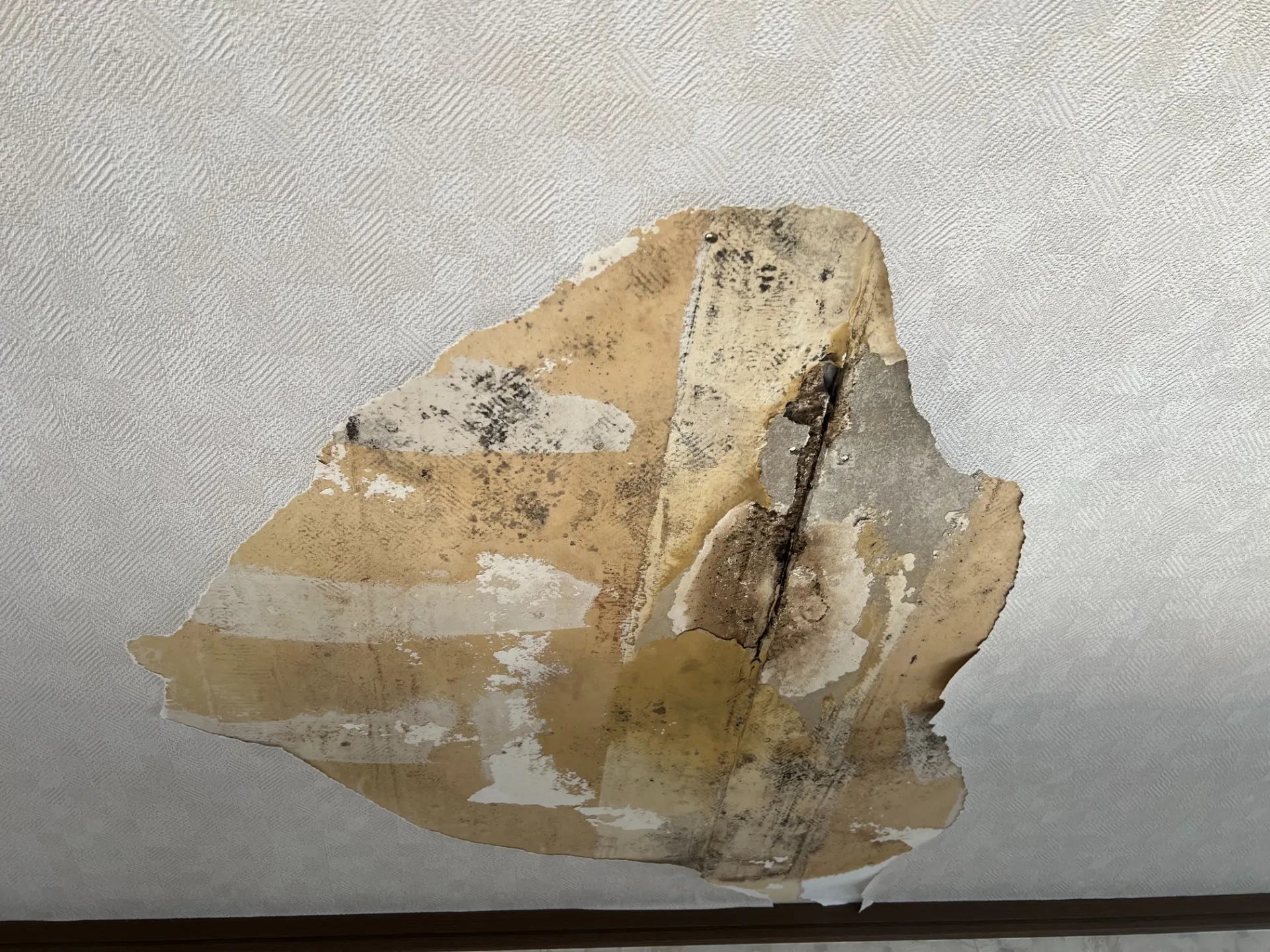
1. Background of Mold Issues and Risks in the Construction Industry
In construction sites, mold is a problem that cannot be ignored.
Even a beautifully designed building can quickly lose its value if mold appears after completion. This is especially critical in spaces where people spend long periods of time—such as homes, hospitals, and schools—where mold growth can lead to serious health issues. In the construction field, “invisible risks” are often the most troublesome, and mold is a prime example, as it arises from a complex combination of factors like humidity, temperature, ventilation, and materials. That’s why it is essential to implement clear countermeasures during the planning phase—once overlooked, such issues can be difficult to reverse.
1-1. The Impact of Mold on Buildings and People (Structure, Health, and Cost)
Mold not only damages the appearance of a building but also gradually compromises its structural integrity. It can rot wooden components, deteriorate walls and subfloors, and ultimately reduce the building’s durability. In severe cases, this may require large-scale repairs. If mold reoccurs repeatedly, it could lead to costly additional work such as replacing wallpaper, subfloor materials, and insulation—costs that should not be underestimated.
The impact on human health is also serious. Mold spores spread through the air and can cause allergies, asthma, skin irritations, and other health issues. This is particularly concerning for the elderly, young children, and individuals with weakened immune systems, as mold can significantly affect their living environment. These health concerns extend beyond residential properties, posing risks to users and staff in public facilities, making it a major liability for property managers and contractors.
Furthermore, there have been real-world cases where mold problems have led to complaints and even legal action. Claims such as “There’s mold in a brand-new house,” “It’s a construction defect,” or “The management was negligent” can severely damage a company’s reputation, and in some cases, result in lawsuits or loss of client trust.
Thus, mold has a threefold impact: structural degradation, health hazards, and legal/managerial risks—all of which must be taken seriously.
1-2. New Mold Risks in Airtight and Highly Insulated Buildings
In recent years, the construction industry has focused on improving housing performance through airtight and highly insulated designs. While this approach is effective for enhancing energy efficiency and reducing heating and cooling losses, it has also introduced new challenges—specifically, the risk of moisture retention and internal wall condensation, both of which promote mold growth.
Compared to traditional homes, modern structures restrict air circulation, making it difficult for moisture to escape once it accumulates. For example, in winter, when the interior is heated and the temperature difference between inside and outside is significant, condensation often forms on windows and inside wall cavities. Once moisture enters wall structures, it can go undetected and allow mold to proliferate from within—leading to damage that may require extensive repairs by the time it is discovered.
In addition, insulation materials and multilayered wall and ceiling systems often reduce breathability, making it harder for trapped moisture to evaporate. If vapor barriers are poorly installed or there are hidden water leaks, mold can silently grow in hidden spaces without notice.
Given these modern construction challenges, creating buildings that are truly mold-resistant has become increasingly difficult. This reality makes it more important than ever for the construction industry to implement proactive, scientifically grounded mold prevention strategies from the planning stage onward.
2. Preventive Measures at the Design Stage
Mold growth in buildings is often the result of design flaws or insufficient consideration during the planning stage. Conversely, by implementing the right countermeasures at the design phase, most future mold risks can be effectively prevented.
In this section, we will explore two key aspects of architectural design that are critical for effective mold prevention.
2-1. Reading the Site and Environment: Location, Sunlight, Wind, and Drainage
A successful architectural design starts with a thorough understanding of the site and its surrounding environment. Elements such as soil conditions, drainage, sun exposure, wind flow, and proximity to neighboring buildings are all directly related to mold risk. For example, low-lying terrain prone to moisture retention, north-facing slopes with limited sunlight, and densely built areas with poor ventilation can all contribute to higher indoor and outdoor humidity levels—ideal conditions for mold growth.
During the design phase, it is essential to investigate topography, drainage capacity, and the effects of adjacent structures, and incorporate these findings into the building plans. For instance, if a site is prone to water accumulation due to its low elevation, adjustments such as raising the foundation height or installing adequate drainage channels can prevent water infiltration. Similarly, in areas where neighboring buildings obstruct airflow, natural ventilation may be insufficient, and mechanical ventilation systems might be necessary.
Special attention should be paid to moisture from the north side and ground moisture around the foundation. If these are not properly addressed during design, it can lead to condensation inside the walls or mold beneath the floor after construction. Preventative measures include avoiding storage areas or enclosed rooms along the north side, and incorporating foundation insulation or vapor barriers beneath the structure.
In short, architects must be able to "read the land" in order to design moisture-resistant buildings. Understanding how the site interacts with sun, wind, and water flow—and designing accordingly—is the first step toward effective mold prevention.
2-2. Material Selection and Structural Design (Insulation, Moisture Control, Ventilation)
Equally important are the building’s structural design and the materials used. During the design stage, insulation, vapor control, and ventilation systems must be integrated with mold prevention in mind.
Starting with insulation—condensation caused by temperature differences between indoor and outdoor air is one of the primary causes of mold. To mitigate this, insulation must be properly placed in walls, roofs, and floors to maintain consistent internal temperatures. Particular care should be given to areas prone to temperature fluctuations, such as window surrounds and foundation edges. Selecting the right type and thickness of insulation can significantly reduce condensation risk.
Moisture control is another critical component. Proper installation of vapor barriers is essential to block moisture from entering the building envelope. At the same time, the interior vapor must not be allowed to penetrate wall cavities. This requires precise detailing in the design of vapor control layers. Even small gaps or poorly sealed seams in vapor barriers can render the system ineffective. As a general rule, the vapor barrier should be placed on the interior side of the insulation, and this must be carefully verified during construction.
Ventilation also plays a key role. For example, ventilated wall systems (such as rainscreens or cavity walls) introduce an air gap between the structural wall and the exterior finish, which allows moisture to escape and helps keep the building dry. This is particularly effective in preventing condensation within wall assemblies and contributes to the long-term health of the building.
When selecting building materials, it's wise to opt for those with anti-mold properties or breathable finishes. For wooden elements, use kiln-dried lumber with a moisture content below 15%. For interior wallboards, choose products that have been treated to resist mold. These careful material choices can prevent future issues and reduce repair costs over time.
In summary, effective mold prevention through design requires a strategy built on three principles:
Do not bring moisture in, do not let it accumulate, and make sure it can escape.
In an era where the performance of buildings is more scrutinized than ever, design professionals must stay one step ahead in the battle against hidden moisture.
3. Key Considerations During Construction: On-Site Management and Practical Measures
Mold prevention is not complete with design alone. No matter how well-thought-out the blueprints are, if execution on-site is careless, the intended performance of the building will never be achieved. In fact, many mold issues begin during construction, often due to poor moisture control or inadequate handling of materials. Here, we explain specific, actionable measures that can be implemented on construction sites to effectively minimize mold risk.
3-1. Moisture Content Management, Material Storage, and Drying
One of the most fundamental and crucial practices is managing the moisture content of materials used on-site. Highly absorbent materials such as wood and drywall must be used only when sufficiently dry. If installed while still damp, they may trap moisture within the structure, leading to hidden condensation and mold growth after completion.
Ideally, wood materials should have a moisture content below 15%, but during Japan’s rainy seasons or humid periods, even factory-dried materials may absorb moisture in transit or on-site. Therefore, materials must be properly covered and stored in dry conditions. If necessary, use temporary dehumidifiers or fans to promote drying before installation. On rainy days, ensure building materials are protected with tarps or roofed storage to prevent direct exposure.
In the case of concrete structures, it is vital to allow enough curing and drying time. If interior finishes are installed before the concrete is sufficiently dry, the residual moisture can migrate into wall or ceiling materials, leading to mold issues later. No matter how tight the schedule, moisture drying must be regarded as a critical construction phase, not an optional delay.
In short, "finishing faster" should never be prioritized over "drying properly." Proper on-site moisture management is key to building mold-resistant structures.
3-2. Waterproofing, Rainwater Control, and On-Site Ventilation
One of the most common causes of mold during and after construction is inadequate waterproofing, especially at joints, penetrations, or complex structural intersections. Even small gaps in waterproof membranes or sealants can allow rainwater to enter, especially around windows, balconies, and roof junctions. Once inside, the moisture can be absorbed into walls and ceilings—areas where mold thrives unnoticed.
Attention must be given to critical details such as:
Waterproof tape and sealant around windows and sashes
Roof and wall junctions
Balcony and terrace slopes, including drain outlets
Flashings and drip edges at water-prone joints
These areas are often overlooked or rushed due to tight schedules, but even minor defects here can lead to major post-completion problems.
In addition, during the construction phase, it’s essential to ensure proper ventilation within the building. Temporary structures and coverings may limit natural airflow, allowing internal humidity to build up. This is particularly dangerous in summer or rainy conditions.
Effective solutions include:
Keeping openings (such as windows and doors) open regularly to promote cross-ventilation
Using circulators or industrial fans to keep air moving
Installing dehumidifiers on-site during interior work in high-humidity weather
Ensuring crawlspaces, wall cavities, and roof spaces are properly ventilated
In short, on-site mold prevention during construction depends on three key factors:
Understanding the dryness of materials, preventing water intrusion, and maintaining proper airflow.
Collaboration between the design team and construction crew is essential to identify moisture risks early and handle them correctly—before they become invisible threats hidden behind walls or under floors.
4. Post-Completion Maintenance and Monitoring for Mold Prevention
While much attention is often placed on mold prevention during design and construction, the post-completion phase is equally critical. Even a perfectly built structure can develop mold problems if it is poorly maintained or operated incorrectly. Mold grows quietly yet persistently wherever moisture and nutrients are present, making ongoing maintenance and monitoring essential. Here, we explore practical measures that building owners and managers can take to keep mold under control long after handover.
4-1. Maintaining Indoor Environments: Humidity, Temperature, and Ventilation Systems
The single most important factor in preventing indoor mold growth is controlling humidity. Mold begins to grow when relative humidity exceeds 60%, and proliferation accelerates above 70%. Therefore, keeping indoor humidity between 40–60% is the optimal target.
Installing hygrometers is a simple but effective way to monitor humidity levels, especially in moisture-prone areas such as bathrooms, kitchens, closets, and storage spaces. Modern smart humidity sensors can also provide alerts when humidity rises above safe levels, making continuous management much easier.
Proper operation of ventilation systems is equally essential. Many buildings are equipped with 24-hour ventilation systems, but occupants often turn them off to save energy or because of noise. Unfortunately, this allows condensation and mold to take hold. Maintenance of ventilation systems—such as cleaning filters and ensuring ducts are unobstructed—is also crucial.
Temperature control plays a role as well. Large temperature differences between inside and outside create condensation on windows and cold surfaces. Simple measures such as double-glazing or window films can help stabilize indoor temperatures and minimize condensation risk.
In short, maintaining a healthy indoor environment requires balancing humidity, ventilation, and temperature on a daily basis.
4-2. Regular Inspections, Anti-Mold Coatings, and Timely Repairs
No matter how carefully a building was designed and constructed, its performance naturally deteriorates over time. For this reason, scheduled inspections and preventive maintenance are vital to long-term mold prevention.
Areas requiring special attention include:
Corners of walls, ceilings, and floors: prone to dust and moisture accumulation
Windows and sashes: common sites for condensation and mold along seals and frames
Bathrooms, laundry rooms, and toilets: persistently humid areas with high mold risk
Crawlspaces and attics: often overlooked, but highly susceptible to hidden mold due to poor airflow or unnoticed leaks
Regular inspections (ideally once or twice a year) should check not only for visible mold but also for small leaks, degraded sealants, and blocked ventilation openings. Early detection allows for inexpensive interventions before serious problems arise.
Applying anti-mold coatings during construction or scheduled maintenance can further extend protection. Transparent, long-lasting coatings can be applied to surfaces such as bathroom ceilings, storage areas, or wallpapered walls to provide an invisible defense.
If mold does appear, it is critical to remove it completely before reapplying preventive treatments. Because mold often penetrates deep into building materials, superficial cleaning is not enough. In many cases, professional treatment is required to ensure complete eradication.
By combining regular inspections, preventive coatings, and timely repairs, building managers can protect both the structure and its occupants, while preserving the building’s long-term value.
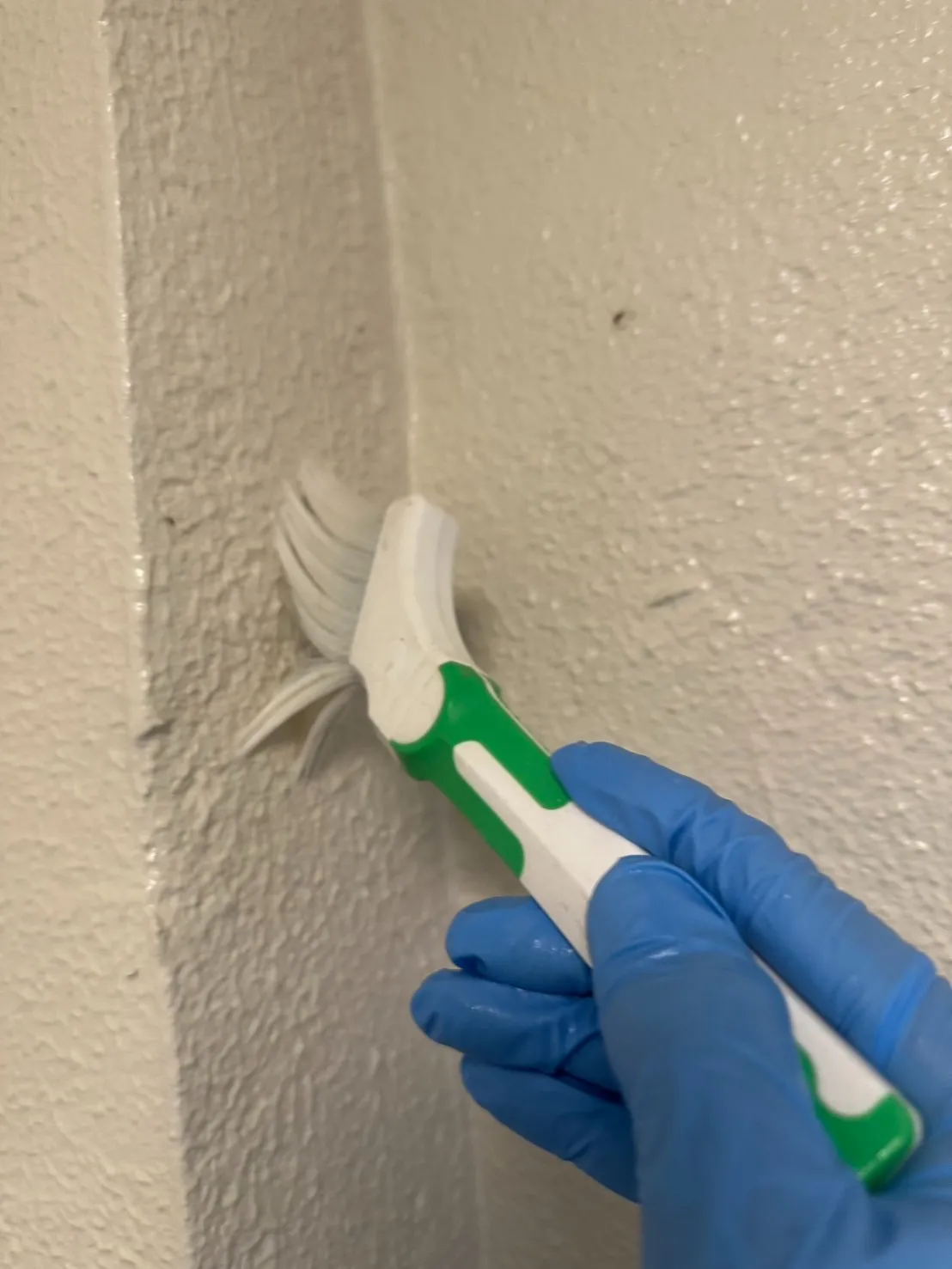
5. Specific Techniques and Application Process: The Case of the MIST Method®
In building mold management, designing and constructing to prevent occurrence is essential, but it is equally important to be able to remove mold quickly and safely if it does appear. This is particularly challenging in buildings with delicate materials—such as residences, hospitals, schools, or cultural properties—where harsh chemicals or abrasive scrubbing cannot be used without causing damage.
Amid these challenges, the construction industry has increasingly turned its attention to an innovative solution: the MIST Method®, a proprietary mold removal technology developed by Kabibusters.
The MIST Method® is a mold removal technology developed to eliminate mold at its roots without damaging the underlying materials. It is distinguished by its safety, long-lasting effectiveness, and immediate results.
In this section, we will introduce its key features as well as the specific steps involved in on-site application.
5-1. What Is the MIST Method®? (Principle and Safety)
The greatest feature of the MIST Method® is that it does not scrub or scrape. Conventional mold removal techniques often rely on physical abrasion, chlorine-based bleaching, or high-temperature steaming. However, these methods risk damaging building surfaces, leaving mold roots deep within materials (which can cause recurrence), and even posing hazards to human health and the environment.
The MIST Method® solves these problems by spraying a specially formulated, low-irritant mold removal agent in fine mist form. The mist penetrates deep into building materials, breaking down and destroying mold at its roots.
Despite its strong disinfecting power, this agent is carefully adjusted in pH and composition, making it safe for delicate materials such as wood, wallpaper, and insulation. It has also passed wastewater safety tests and other evaluations, meaning it can be used safely even in environments where children and the elderly live.
Furthermore, after mold removal, an anti-mold treatment is applied as a finishing step. This provides long-term defense against recurrence, making the method more than just a “temporary fix”—it is recognized as a sustainable mold prevention solution.
In short, the MIST Method® is gentle on materials, safe for humans, highly effective in removal, and preventive in nature, making it an ideal mold eradication solution supported by many in the construction industry.
5-2. On-Site Implementation Steps, Costs, and Scope of Application
The MIST Method® is not applied uniformly across all sites. Instead, it is tailored to each case based on on-site inspections and consultations, considering the building’s condition, material type, and extent of mold growth. This adaptability is one of its major strengths.
The typical workflow includes the following steps:
On-Site Survey and Consultation
Assess mold-affected areas, scale, material types, and history of previous issues
Measure moisture content, temperature, humidity, and airborne mold spore concentration if necessary
Mold Removal (MIST Spraying)
Adjust the formulation according to the affected area and apply in fine mist form
Active agents penetrate deep into the material, breaking down and eliminating mold roots
Gentle treatment without scrubbing or scraping, preserving material integrity
Cleaning and Drying
Collect and remove decomposed mold and debris
Ensure proper drying conditions, using fans or dehumidifiers as needed to minimize recurrence risk
Anti-Mold Treatment (Finishing Step)
Apply an anti-mold agent to maintain a clean state for the long term
Acts not only on surfaces but also against airborne mold spores, extending protection throughout the room
Follow-Up and Recurrence Check
Inspect after a certain period to confirm no signs of mold returning
Provide additional treatment or environmental improvement advice if necessary
The process can often be completed in as little as half a day to a full day, making it suitable even for occupied homes or operational facilities. One of its advantages for business owners is that work can continue without suspending daily operations.
Thus, the MIST Method® is not merely about “removal”—it is an advanced approach that protects materials, eliminates mold at its source, and provides preventive coverage. For builders and facility managers, it represents a reliable partner when facing the challenge of mold outbreaks.
6. Case Studies: Successes and Failures by Region and Building Type
Mold prevention is not merely theoretical—it must be tested in real-world conditions. The occurrence and severity of mold vary depending on regional climate, building type, usage patterns, and maintenance systems. Two buildings constructed with similar methods may produce entirely different outcomes depending on these factors. Here, we examine typical success and failure cases in the construction industry, analyzing what led to positive results and what caused costly mistakes.
Success Case: Mold Removal in a Historic Building in Bunkyo Ward
In historic buildings that are several decades old, ventilation is often insufficient and the structure tends to trap moisture. Mold frequently proliferates in invisible areas such as north-facing rooms, attics, and wall junctions—places where surface cleaning alone is ineffective.
In this project, a detailed on-site survey was conducted first to identify the type and extent of mold and the condition of materials. A non-contact mist-based removal treatment was applied, ensuring no damage to delicate materials such as old wood and traditional wall finishes. Unlike conventional methods, there was no need for scrubbing or scraping, making the process safe for valuable structures.
After removal, an anti-mold treatment was applied, and ventilation pathways were added inside the building to improve airflow. These measures successfully prevented recurrence, preserving both the aesthetic value and structural integrity of the building.
Success Case: Mixed-Use Complex with Basement Stores in Tokyo Bay Area
The Tokyo Bay area is characterized by high humidity, and condensation is a chronic issue in basements. In this mixed-use complex, mold frequently appeared on basement walls and floors, causing odors and deterioration of wall coverings.
As a countermeasure, detailed measurements of wall humidity and temperature distribution were conducted, allowing the team to pinpoint areas most prone to condensation. Alongside mold removal, the building’s airflow design was revised, improving overall ventilation. Permanent dehumidifiers were installed with humidity monitoring, enabling automatic activation during humid conditions. For finishing materials, products with both anti-mold and moisture-permeable properties were selected.
Post-treatment inspections confirmed no recurrence of mold, improved air quality, and high tenant satisfaction, making this project a strong example of success in a high-humidity urban environment.
Success Case: Comprehensive Mold Remediation and Prevention in a Tokyo Detached House
In a detached house within Tokyo’s 23 wards, aging construction had led to a persistent musty odor indoors, with visible dark mold stains around closets and bathroom walls. Seasonal humidity, particularly during the rainy season and summer, worsened conditions and even reduced air conditioning efficiency.
To address this, a full diagnostic assessment of insulation, ventilation, and airflow was conducted. Mold removal using mist technology was combined with structural improvements, such as adding vapor barriers and securing airflow in closet ceiling areas.
Residents also received guidance on daily operation, including proper ventilation habits, cleaning routines, and humidity control. More than a year after completion, no mold recurrence has been observed, while indoor humidity has stabilized, improving both comfort and living quality.

Mold Removal and Prevention: Kabi Reform Tokyo & Nagoya, Kabibusters Osaka
Mold is not only an eyesore—it also accelerates structural deterioration, poses health risks, and can trigger serious issues such as customer complaints or even lawsuits. No matter how carefully a building is designed or constructed, changes in humidity, poor ventilation, or natural aging can still lead to unexpected mold outbreaks.
For construction companies, property managers, and homeowners who want to be prepared—or who need to remove existing mold safely, thoroughly, and without recurrence—the solution is our proprietary MIST Method®, provided by Kabi Reform Tokyo & Nagoya and Kabibusters Osaka.
Removing Mold Completely Without Damaging Materials: The MIST Method®
The MIST Method® is a non-contact mold removal technology that requires no scrubbing or scraping. By applying a fine mist of a specially formulated agent, it penetrates deep into building materials, breaking down and destroying mold at the root. This ensures complete removal while protecting delicate materials such as wood and insulation, restoring their natural beauty and function.
The solution is carefully adjusted in pH and composition, making it safe for people and the environment. It can be used confidently in homes with children, as well as in sensitive environments such as elderly care facilities, hospitals, and schools.
Blocking Recurrence with Advanced Anti-Mold Treatment
Our work doesn’t stop at removal. The MIST Method® includes a powerful anti-mold treatment as a finishing step. This not only protects treated surfaces but also acts against airborne spores, delivering mold prevention across the entire space—from the surface to deep within materials and throughout the air itself.
Different formulations can be customized by adjusting hydrogen ion concentration (pH), allowing treatment of highly sensitive materials. This makes the method suitable even for historic buildings and cultural properties, where preservation is critical.
Professional Technology with Safety, Speed, and Long-Term Effectiveness
The MIST Method® uses a specialized mold removal agent that has passed rigorous safety tests, including industrial wastewater examinations. Its immediacy means spaces can be used again right after treatment. Furthermore, its long-lasting anti-mold effect significantly reduces maintenance costs over time.
Whether you’ve struggled with invisible mold for years, faced quick recurrence after cleaning, or sought a solution that protects valuable materials, our technology offers a reliable answer.
Leave Your Mold Problems to the Building Professionals
Kabi Reform Tokyo & Nagoya and Kabibusters Osaka bring extensive experience from projects nationwide, tailoring solutions to each unique site. From initial surveys to removal, anti-mold treatment, and aftercare, we provide a comprehensive one-stop service. Our specialists, with deep knowledge of construction, materials, and building systems, deliver safe, precise, and effective results.
If you are facing mold issues in your property, don’t wait—consult us today. We will provide the best root-cause solution for your specific building and environment.
---------------------------------------------------------------------
カビ取リフォーム
東京営業所
〒141-0022
東京都品川区東五反田2-5-2 YHE CASK GOTANDA6階
電話番号:090-8321-4408
名古屋本社
〒465-0028
愛知県名古屋市名東区猪高台1-1301 タイコウビル1F
電話番号 : 0120-588-766
サイト:https://taikou-kensou.co.jp/
大阪営業所
〒532-0003
大阪府大阪市淀川区宮原1-19-23
電話番号:080-6978-3068
カビバスターズ大阪
https://kabibusters-osaka.com/
【検査機関】
一般社団法人微生物対策協会
https://kabikensa.com/
----------------------------------------------------------------------