Zero Health Risks! Essential Mold Prevention Techniques for Home Builders
2025/07/23

Thank you for reading our blog today.
In today's housing industry, where airtight and highly insulated homes are becoming the norm, one often overlooked issue in exchange for comfort is mold. Mold is not just an eyesore—it can also pose serious health risks and cause damage to building materials. This article provides a thorough guide for home builders on mold prevention measures that should be implemented from the design and construction stages. Covering everything from the basics of mold causes and countermeasures to on-site inspection points and the safe removal method using the MIST Method®, this article offers practical and comprehensive information. By reading this, you'll gain specific strategies to prevent health hazards before they occur. Let’s work toward creating homes that are safe, trustworthy, and as mold-free as possible.
1.Mold Issues Faced by Home Builders
Homes built by home builders typically feature highly airtight and well-insulated structures to improve livability. However, this design also tends to trap moisture, creating an environment where mold can easily thrive. In particular, mold often develops in hidden areas, and there has been a growing number of cases where it leads to complaints after the handover. This highlights the need for careful attention and preventive measures from the construction stage.
1-1. Mold Risks in Highly Airtight and Insulated Homes
Highly airtight and well-insulated homes improve heating and cooling efficiency and are excellent for energy saving. However, restricted airflow makes it easier for moisture to accumulate, increasing the risk of mold growth. When moisture builds up in hidden areas such as inside walls or beneath floors, mold can spread unnoticed. This type of mold is often discovered only after residents move in, potentially turning into a significant quality issue for the home.
1-2. Hidden Mold in Construction Phases and Underfloor Areas
Mold can occur not only in completed homes but also during construction. For example, if rain-soaked lumber is used or if materials are sealed before being fully dried, mold can take root inside the building components. Poorly ventilated spaces like underfloor areas or attics also trap moisture, becoming ideal environments for mold growth. Neglecting to manage moisture in these hidden parts can lead to costly and time-consuming repairs later. Therefore, home builders must prioritize thorough moisture control during construction.
1-3. Complaints After Handover and Impact on Brand Reputation
Mold problems in homes don’t just result in visible damage—they also pose a serious risk to customer trust. If mold is discovered in areas like behind bathroom walls or inside storage spaces after handover, clients may suspect construction flaws or inadequate quality control. Such incidents, especially if shared through word of mouth or reviews, can severely damage a company's brand image. To prevent these issues, proactive measures must be taken from the design stage through to construction moisture management and final pre-handover inspections.

2.Main Causes of Mold Growth
Several clear environmental factors contribute to mold growth. In particular, when moisture, temperature, and a nutrient source are all present, mold can multiply rapidly. For home builders, understanding these causes and effectively eliminating them during the design and construction phases is essential for maintaining housing quality and improving customer satisfaction.
2-1. Environments with Condensation and Moisture Accumulation
Moisture is the most significant factor contributing to mold growth. When there's a large temperature difference between the interior of a house and the outside air, condensation forms on walls and windows. This moisture can seep into building materials, creating the ideal environment for mold to thrive. Poorly ventilated areas such as kitchens, bathrooms, and closets—as well as underfloor spaces and inside walls—are particularly vulnerable. If condensation becomes a regular occurrence, mold may take root in hidden areas, eventually causing material degradation and health problems. In highly insulated homes, condensation often occurs behind insulation materials, making it crucial to incorporate ventilation and condensation prevention strategies during the design phase.
2-2. Moisture Content in Materials and Construction Errors
When wood or board materials used in construction retain high moisture content during installation, the risk of internal mold growth increases. Improper storage during rainy conditions and using wet materials on-site can lead to mold development in unseen locations. Construction errors such as missing vapor barriers or poorly installed insulation also contribute to mold issues. These mistakes often surface after the home is handed over and require costly and time-consuming repairs. Construction supervisors must consistently monitor material moisture levels and drying conditions on-site to ensure proper construction quality.
2-3. Design Oversights in Building Plans
In housing design, the focus often lies heavily on insulation and airtightness, sometimes at the expense of proper ventilation and moisture escape routes. Modern homes, designed for high energy efficiency, tend to be tightly sealed, which can hinder airflow and trap moisture indoors, creating ideal mold conditions. Additionally, certain design features—like open ceilings or complex roof shapes—may unintentionally obstruct airflow. To effectively prevent mold, it is essential to develop a thorough ventilation and moisture flow plan during the design stage. Home builders must balance aesthetics and performance with careful attention to moisture control.
3.Health Effects: Allergy and Infection Risks
Mold is not just a visual concern—it can have a wide range of negative effects on human health. It particularly impacts the respiratory system and skin, often leading to allergies or infections. To protect the health of the family, it is essential not to ignore mold issues in the home environment and to address them appropriately.
3-1. Allergies and Respiratory Illnesses
Mold spores are extremely small and easily become airborne, allowing them to enter the respiratory system. This can lead to mold allergies, which commonly manifest as sneezing, a runny nose, persistent coughing, and itchy eyes. Children and the elderly are particularly vulnerable. Mold can also worsen asthma, and in many cases, doctors recommend reevaluating the living environment as part of treatment. Even when mold is not visible, it can still negatively impact health, making it easy for people to be unaware of increasing health risks.
3-2. Effects on People with Weakened Immune Systems
For individuals with weakened immune systems, mold poses a serious threat. People with chronic illnesses, those undergoing cancer treatment, and the elderly are especially susceptible to fungal infections caused by mold. One common example is pulmonary aspergillosis, which can lead to severe health complications in some cases. Mold should not be regarded merely as a nuisance—it can be a life-threatening hazard. When considering the safety of a home, mold prevention should be seen as the first step toward protecting health.
3-3. Psychological Stress and Impact on Quality of Life
Even the sight of mold can cause discomfort and lead to significant psychological stress. In particular, homeowners who have invested heavily in a new or custom-built home may feel deeply disheartened if mold appears early on, diminishing their attachment to the home. Additionally, visible mold stains and unpleasant odors can affect how guests perceive the space, leading to a loss of confidence in the home itself. When the living environment becomes a source of stress, overall satisfaction with daily life declines and, in some cases, may prompt homeowners to consider moving or selling. Preventing mold is essential not only for health but also for maintaining the comfort and emotional well-being that a home should provide.
4.Preventive Measures Home Builders Should Take
Preventing mold growth requires consistent measures not only after construction is completed but also throughout the design, construction, and post-handover phases. For home builders, it is crucial to incorporate thoughtful strategies at each stage—not just to enhance construction quality but also to ensure long-term comfort for residents. These efforts are key to building trust and maintaining a strong reputation.
4-1. Proper Design of Airtightness and Insulation
While highly airtight and insulated homes offer excellent energy efficiency, poor design can lead to moisture accumulation. It's crucial to maintain a balance and avoid “excessive airtightness.” Proper planning for insulation material selection, ventilation layers, and the correct placement of vapor barriers is essential to prevent internal condensation. Prioritizing insulation without ensuring airflow can unintentionally create an environment where mold thrives. A well-balanced design that integrates airtightness, insulation, and ventilation is the foundation for effective mold prevention.
4-2. Installation and Operation of Ventilation Systems
Controlling indoor moisture relies heavily on a well-designed ventilation system. Even with mechanical 24-hour ventilation in place, poor design or construction can greatly reduce its effectiveness. For example, if airflow paths are obstructed or exhaust outlets are poorly positioned, air may not circulate properly, causing moisture to stagnate. It’s also important to educate homeowners on the importance of daily ventilation, along with how to perform regular filter cleaning and system maintenance. Ventilation is a key factor involving design, construction, and daily habits—it’s essentially how the home "breathes."
4-3. On-Site Moisture Control and Training Systems
To effectively prevent mold, thorough on-site moisture control is essential. If materials are left unprotected during rain or if underfloor vents are blocked during construction, the risk of mold appearing post-completion increases. Such risks can’t be mitigated by design alone; they require awareness and diligence from on-site workers and supervisors. Therefore, home builders must provide education on mold basics and establish clear construction guidelines. Creating management systems such as checklists and point-and-call inspections helps ensure consistency. Assigning a “moisture control supervisor” at each site can also prevent oversights and reduce quality discrepancies. By formalizing countermeasures into standardized procedures, human error can be minimized, enabling consistent delivery of high-quality, mold-free homes.
5.Daily Moisture Control and Lifestyle Habits
No matter how advanced the home's performance or construction quality may be, moisture can still accumulate due to the residents' daily habits, increasing the risk of mold. It is essential for home builders to clearly and carefully communicate the importance of daily moisture control and specific methods for maintaining it at the time of handover.
5-1. Practical Tips for Moisture Control in Wet Areas
Wet areas such as bathrooms and kitchens are particularly prone to moisture buildup. Simple habits—like keeping the bathroom door closed and running the exhaust fan for a while after bathing, or always using the range hood while cooking—can effectively prevent mold. Storage spaces under bathroom sinks also tend to trap moisture, so regularly opening cabinet doors to allow airflow or placing dehumidifying agents can help. Home builders should provide easy-to-understand materials or checklists about moisture control in these areas to enhance customer satisfaction.
5-2. How to Use Dehumidifiers and Air Circulators
Using dehumidifiers and air circulators is highly effective in promoting air circulation and maintaining proper humidity levels indoors. During the rainy season or in winter when condensation is common, placing dehumidifiers in strategic locations can help keep moisture-prone rooms comfortable. Air circulators create airflow that prevents moisture from accumulating in specific areas. They are particularly useful in poorly ventilated spaces such as north-facing rooms or closets. Home builders should offer practical suggestions, including the use of these appliances, to help homeowners create a comfortable living environment.
5-3. Furniture Placement and Interior Layout Tips
One commonly overlooked factor in daily life is how furniture placement can obstruct airflow. Placing furniture flush against the wall prevents air from circulating behind it, causing moisture buildup and increasing the risk of mold. Simply leaving a small gap between the wall and large items like wardrobes or sofas can significantly improve ventilation. It’s also important to maintain airflow inside closets and storage spaces. Avoid overpacking them and use slatted boards or dehumidifiers to allow air to circulate, helping prevent mold. Home builders should explain these practical lifestyle tips at the time of handover and establish support systems that make it easy for homeowners to implement them.
6.Detecting Early Signs of Mold and Responding Promptly
Once mold begins to grow, it spreads quickly and can cause serious damage to building materials and interiors if not addressed promptly. Therefore, recognizing the early signs and responding quickly is crucial. As a home builder, it is essential to educate homeowners on how to identify these signs and clearly outline the inspection and response procedures.
6-1. Regular Inspection Methods for Hidden Areas
Mold can develop not only in visible places like bathrooms and around windows but also in harder-to-see areas such as under floors, behind walls, and in attics. This makes regular inspections critically important. Simple self-checks—like opening underfloor storage to check for moisture buildup or smelling for damp odors at the back of closets—can help detect early signs. Bubbling wallpaper, discoloration, or unusual smells may also indicate mold. Home builders should educate homeowners about the importance of monitoring hidden areas and provide seasonal inspection checklists to help prevent damage from spreading.
6-2. Protocols for Handling Rain-Soaked Materials During Construction
If materials get wet during construction, residual moisture can lead to mold problems after completion. To prevent this, immediate on-site protocols are essential. For example, wet materials should be temporarily set aside and thoroughly dried before use; materials should be covered with tarps or protective sheeting; and site supervisors should maintain inspection records during rainy weather. These rules must be clearly defined and strictly enforced on-site. It's also important to be flexible with the construction schedule, avoiding work on rainy days when necessary. Such management practices form the first line of defense against mold.
6-3. Sharing Information and Providing Response Manuals for Homeowners
Close coordination between home builders and homeowners is crucial for detecting early signs of mold and responding promptly. Many issues arise from a lack of awareness—such as not recognizing the signs of mold or not knowing who to contact. To address this, it's important to provide guides during handover that explain how to spot mold indicators and clarify the contact points for reporting concerns. Offering a response manual that outlines “what to check first,” “how to take photos,” and “where to report” based on different mold symptoms will give homeowners the confidence to act swiftly. This enables early detection and quick response, preventing larger problems. Strengthening information sharing and support systems is a vital step in building trust as a home builder.
7.Mold Removal Methods Using Specialized Techniques
Once mold has developed, it is often difficult to completely remove it using household cleaners alone, making professional techniques necessary. Mold that has penetrated deep into building materials requires thorough treatment to ensure both removal and prevention of recurrence. This section explains specialized methods for safely and effectively eliminating mold.
7-1. Advantages of the MIST Method® (Specialized Fog-Type Agent)
The MIST Method® is an innovative technology that gently yet thoroughly removes mold from the root. By spraying a fog-like specialized agent onto the affected material, it penetrates deep into the surface, reaching invisible mold roots and breaking them down for complete elimination. This technique does not involve scrubbing or scraping, making it ideal for delicate materials such as wood, plaster, or traditional Japanese paper. Additionally, the mold removal agent used has been confirmed to be safe through industrial wastewater testing and poses minimal risk to human health. This makes it safe to use even in homes with young children or elderly residents. For home builders, being aware of such high-performance techniques is key to restoring trust in the event of unexpected issues.
7-2. Physical Removal vs. Chemical Decomposition
There are two main approaches to mold removal: physical removal and chemical decomposition. Physical removal involves scrubbing or scraping the surface, which may provide short-term results but risks damaging materials and leaving behind roots that can lead to recurrence. In contrast, chemical decomposition breaks down mold by destroying its cell membranes, offering a more thorough and long-lasting solution. Using a dedicated agent like in the MIST Method® allows for gentle yet complete mold eradication while preserving the material. For home builders, choosing the right method for each situation and partnering with professional mold removal experts is essential for maintaining housing quality.
7-3. Post-Treatment Methods Focused on Preventing Recurrence
Even if the mold appears to be completely removed, it can easily return if the treatment was insufficient. That’s why post-removal treatments aimed at recurrence prevention are essential. The MIST Method® includes applying an anti-mold agent after removal to protect the entire space and prevent mold roots from regrowing. This significantly reduces the risk of airborne mold spores settling and multiplying on walls or ceilings. Expanding the treatment area beyond the visible mold spot helps cut off the source altogether. For home builders, providing not just removal but also preventive treatment ensures long-term housing quality and builds continued trust with clients.
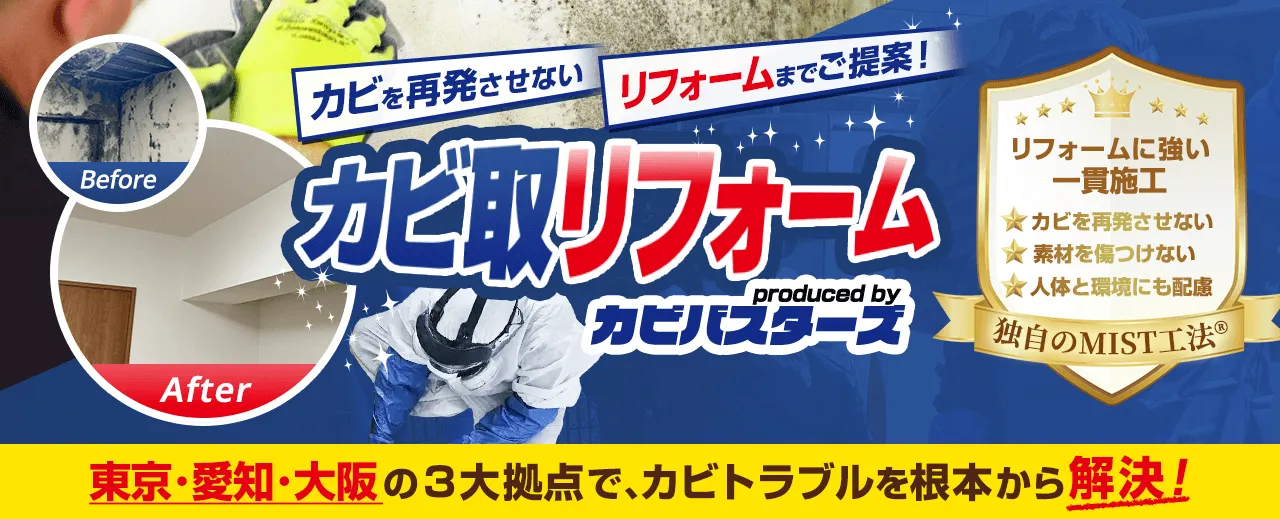
For mold removal and prevention, trust Kabi Busters Osaka and Kabi Reform Tokyo & Nagoya.
Mold prevention is an essential factor in maintaining housing quality. For home builders, early action and reliable prevention directly contribute to customer satisfaction. At Taikou Kensou Co., Ltd., through our services “Kabi Busters Osaka” and “Kabi Reform Tokyo & Nagoya,” we utilize our proprietary MIST Method® to thoroughly break down and eliminate mold from the root—without damaging the materials. Since our specialized agents are safe for humans, our methods can be confidently applied not only in homes but also in childcare facilities and elderly care centers.
One of our greatest strengths lies in our ability to offer mold removal and renovation services in one seamless process. We can immediately proceed with repairs and beautification of mold-damaged interiors, including flooring, ceilings, and wallpaper, right after removal—without the need to coordinate with multiple contractors. This streamlined process helps optimize scheduling and costs, and has earned us high praise from many corporate clients.
Our renovation services cover a wide range, including water area renovations (bathrooms, washrooms, toilets, kitchens), interior upgrades (wallpaper replacement, flooring, layout modifications), as well as insulation, soundproofing, and barrier-free improvements. Regardless of building type—be it a house, apartment, or commercial facility—we provide the most suitable renovation plans based on the specific site conditions. Especially for areas damaged by mold, our integrated approach from removal to renovation maximizes the home’s “restorative power.”
Whether you are a home builder, construction firm, property management company, or individual homeowner, if you're looking to create a mold-free, comfortable space and enhance the value of your living environment, please consult with Taikou Kensou Co., Ltd. With bases in Osaka, Tokyo, and Nagoya, we are committed to providing fast and reliable solutions. We take full responsibility for resolving both mold issues and renovation needs.
---------------------------------------------------------------------
カビ取リフォーム
東京営業所
〒141-0022
東京都品川区東五反田2-5-2 YHE CASK GOTANDA6階
電話番号:090-8321-4408
名古屋本社
〒465-0028
愛知県名古屋市名東区猪高台1-1301 タイコウビル1F
電話番号 : 0120-588-766
サイト:https://taikou-kensou.co.jp/
大阪営業所
〒532-0003
大阪府大阪市淀川区宮原1-19-23
電話番号:080-6978-3068
カビバスターズ大阪
https://kabibusters-osaka.com/
【検査機関】
一般社団法人微生物対策協会
https://kabikensa.com/
----------------------------------------------------------------------